This gap between appearance and compliance is a hidden liability. It’s not about whether your office looks clean. It’s about whether you can prove you’ve taken reasonably practicable steps to protect your employees from foreseeable health risks. Without that proof, you’re exposed to significant fines and legal consequences that most business owners don’t see coming until it’s too late. For businesses looking to understand what proper compliance looks like, our homepage outlines the standards Sydney workplaces need to meet.
This article helps you understand what the law actually requires and how to close the compliance gap before it becomes costly.
The $50,000 Fine Hiding in Your Office Kitchen
A Sydney business recently faced a substantial fine after a workplace inspection revealed hygiene violations in their common areas. The office wasn’t visibly dirty. Staff cleaned regularly. But when inspectors checked documentation of cleaning schedules, high-touch surface protocols, and verification records, they found gaps. Those gaps translated into non-compliance with the Work Health and Safety Act.
The fine wasn’t for a filthy kitchen. It was for failing to prove they’d met their documented compliance obligations.
Your kitchen, bathroom, and shared spaces are potential liability hotspots. Inspectors actively look for these violations. They check whether you have systems in place, not just whether surfaces look clean on the day they visit. Most business owners don’t realise this until they’re facing penalties.
What the Work Health and Safety Act Actually Requires
Under the WHS Act, employers must provide a clean and hygienic workplace. That doesn’t mean it just needs to look tidy. It means you need documented processes that address health risks in a way that’s reasonably practicable.
Reasonably practicable isn’t about good intentions. It’s about what you can prove you’ve done. If an employee gets sick or an inspector visits, they’ll ask for evidence: cleaning schedules, task-specific checklists, records of what was cleaned, when, and how. Without that documentation, you’re treated as non-compliant, even if cleaning happens regularly.
The law requires you to identify health hazards, implement controls, and verify those controls are working. That’s a system, not just a service contract.
Your Duty of Care Extends Beyond ‘Looking Clean’
Visual cleanliness doesn’t equal compliance. You need to address invisible health risks like bacteria, allergens, and mould. The average office desk harbours 400 times more bacteria than a typical toilet seat. That’s not visible, but it’s a genuine health risk.
Duty of care means preventing illness and health issues, not just maintaining appearances. If employees are getting sick because of poor hygiene in shared spaces, that’s a foreseeable risk you’re legally obligated to control.
The Three Compliance Gaps Inspectors Target First
Inspectors check three areas immediately: documentation of cleaning schedules, high-touch surface protocols, and air quality management.
Documentation matters because it’s the only way to prove compliance. If you can’t show dated cleaning logs with task-specific details, inspectors assume it didn’t happen. Even if your cleaners come in every night, lack of documentation is treated as lack of compliance.
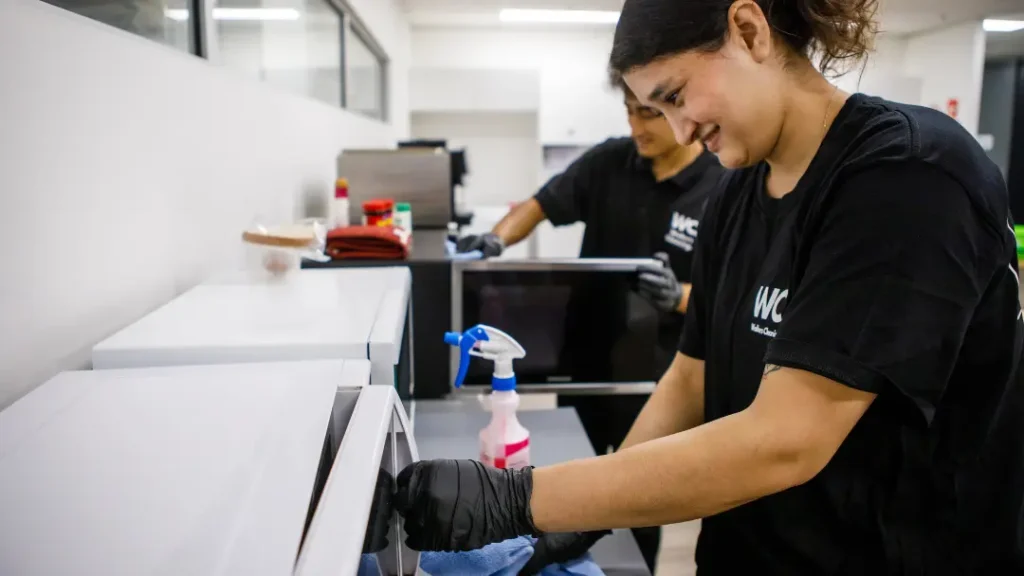
High-touch surface protocols matter because these areas spread illness quickly. Door handles, kitchen appliances, meeting room equipment. If you’re not cleaning these with appropriate frequency and methods, you’re creating a transmission risk.
Air quality management matters because poor ventilation and dust accumulation trigger respiratory issues and allergies. If you’re not addressing air vents, carpet deep-cleaning, and mould sources, you’re failing to control a known health hazard.
These aren’t bureaucratic technicalities. They’re genuine risks that affect employee health and your legal exposure.
Why Your Current Cleaning Schedule Might Not Protect You
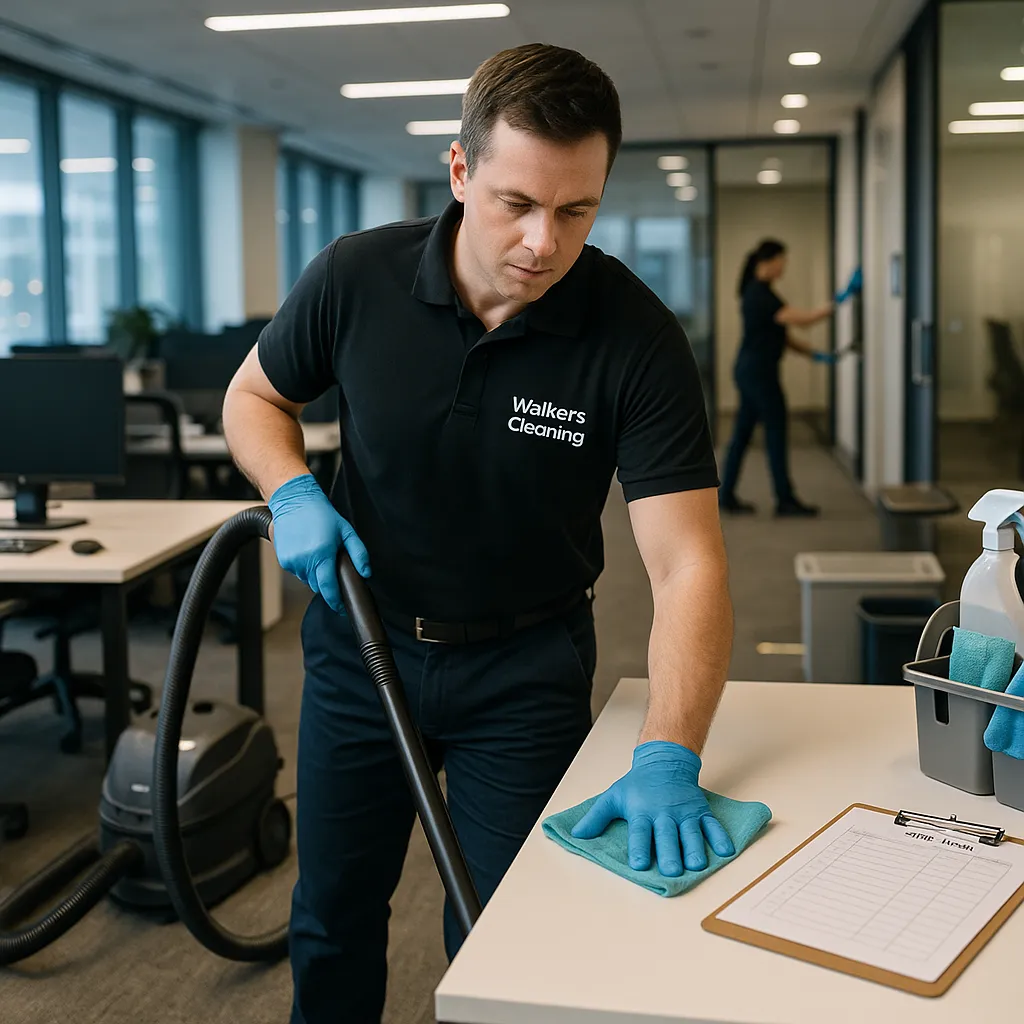
Most cleaning contracts focus on visible areas: floors, bins, surfaces. That’s what makes an office look clean. But compliance-critical zones often get missed. Keyboard disinfection, appliance handle sanitisation, air vent inspection, carpet deep-cleaning. These require different techniques, equipment, and documentation.
The gap isn’t that cleaners are doing a bad job. It’s that typical contracts don’t align with legal requirements. Regular cleaning without documented frequency, methods, and verification doesn’t prove compliance when an inspector asks.
You need to know what’s being cleaned, how often, and with what products. More importantly, you need to be able to prove it.
The 400:1 Bacteria Problem on Your Employees’ Desks
Office desks have 400 times more bacteria than toilet seats. Keyboards, phones, and shared equipment are major transmission points for illness. This isn’t just unpleasant. It’s a legal obligation to minimise foreseeable health risks.
When employees get sick from office-transmitted illnesses, that’s absenteeism cost. Absenteeism due to illness costs the Australian economy billions annually. Poor office hygiene is a contributing factor. If you’re not addressing high-bacteria zones, you’re creating both a health risk and a productivity drain.
High-Risk Zones That Standard Cleaning Contracts Miss
Kitchen appliance handles, meeting room equipment, bathroom door handles, air vents, carpet deep-cleaning. These areas require specialised cleaning techniques and equipment, not just surface wiping.
Germs accumulate on appliance handles because they’re touched constantly but rarely disinfected. Meeting room equipment gets handled by multiple people but isn’t always included in cleaning schedules. Dust and mould affect air quality and can trigger respiratory issues and allergies, but air vents are often overlooked until there’s a visible problem.
Carpets accumulate dust mites and allergens that regular vacuuming doesn’t remove. These zones matter because they create ongoing health risks that standard cleaning doesn’t address.
When ‘Regular Cleaning’ Becomes Evidence Against You
If an employee gets sick or an inspector finds violations, your cleaning schedule becomes scrutinised evidence. Having a cleaning contract but no documentation of what was actually done can work against you in a legal case.
“We have cleaners come in” isn’t a defence without proof of what they cleaned, when, and how. If you can’t show task-specific logs, product safety data sheets, and verification records, you’re in a weak position.
This is a documentation gap, not a cleaning gap. It’s fixable, but you need to address it before it becomes a problem.
Building a Defensible Hygiene Programme

A hygiene programme is a documented, verifiable system. It’s not just a cleaning schedule. It’s proof that you’ve identified risks, implemented controls, and verified they’re working.
Defensible means you can prove compliance if questioned by inspectors or in a legal situation. This is practical business protection, not just a compliance exercise. You’re building evidence that you’ve met your duty of care. If you need expert help implementing this, Walkerscleaning specialises in compliance-focused hygiene programmes for Sydney businesses.
Documentation That Proves Compliance (Not Just Effort)
What documentation actually matters: dated cleaning logs, task-specific checklists, product safety data sheets, and incident records.
There’s a difference between “we clean regularly” and “here’s proof we cleaned the kitchen appliance handles on 15 March 2026 using quaternary ammonium disinfectant, verified by supervisor signature.” The second version proves compliance. The first doesn’t.
A compliance-ready cleaning log includes the date, specific area cleaned, method used, products applied, and verification signature. Simple, consistent record-keeping. No complex systems required.
The Cleaning Frequency Matrix for Different Risk Areas
High-risk areas like kitchens and bathrooms need daily attention. Medium-risk areas like desks and meeting rooms need different protocols. Low-risk areas have different requirements.
Frequency should match risk level and usage patterns, not just convenience. Kitchen surfaces need daily disinfection. Deep carpet cleaning should happen quarterly. Air vent inspection should be bi-annual. Understanding how to track cleaning performance helps ensure these schedules are actually followed.
This isn’t one-size-fits-all. Assess your specific risk areas based on how many people use them, what activities happen there, and what health hazards exist.
Third-Party Verification: When and Why It Matters
Third-party verification provides independent proof of compliance. Professional hygiene audits or testing give you evidence that isn’t just self-reported.
It’s worth investing in for high-risk industries, after complaints, before inspections, or as preventive protection. Professional cleaners with specialised equipment can identify and eliminate issues like mould and allergens that regular cleaning misses.
This isn’t mandatory for everyone. It’s strategic protection for higher-risk situations where you need stronger evidence of compliance.
The Real Cost of Getting This Wrong

Photo by www.kaboompics.com on Pexels
That $50,000 fine scenario isn’t hypothetical. It’s a real risk for Sydney businesses that haven’t closed the compliance gap. But fines are just one consequence. There’s also legal liability, employee illness costs, productivity loss, and reputational damage.
Poor office hygiene contributes to absenteeism that costs the Australian economy billions annually. When employees get sick because of preventable hygiene issues, you’re paying for sick leave, reduced productivity, and potential legal claims.
Contrast that with the cost of getting it right: documentation systems, targeted cleaning, and verification processes. The investment is significantly lower than the cost of non-compliance.
Review your current hygiene programme against compliance requirements, not just cleanliness standards. If you can’t prove you’re meeting your duty of care, you’re exposed. For businesses ready to implement proper compliance systems, 2026 commercial cleaning services in Sydney are increasingly focused on documentation and verification, not just visible cleanliness.
Start with an audit of what you can actually prove. Then build the documentation and processes to close the gaps. This is fixable, but it requires action before an inspector arrives or an employee makes a complaint.