
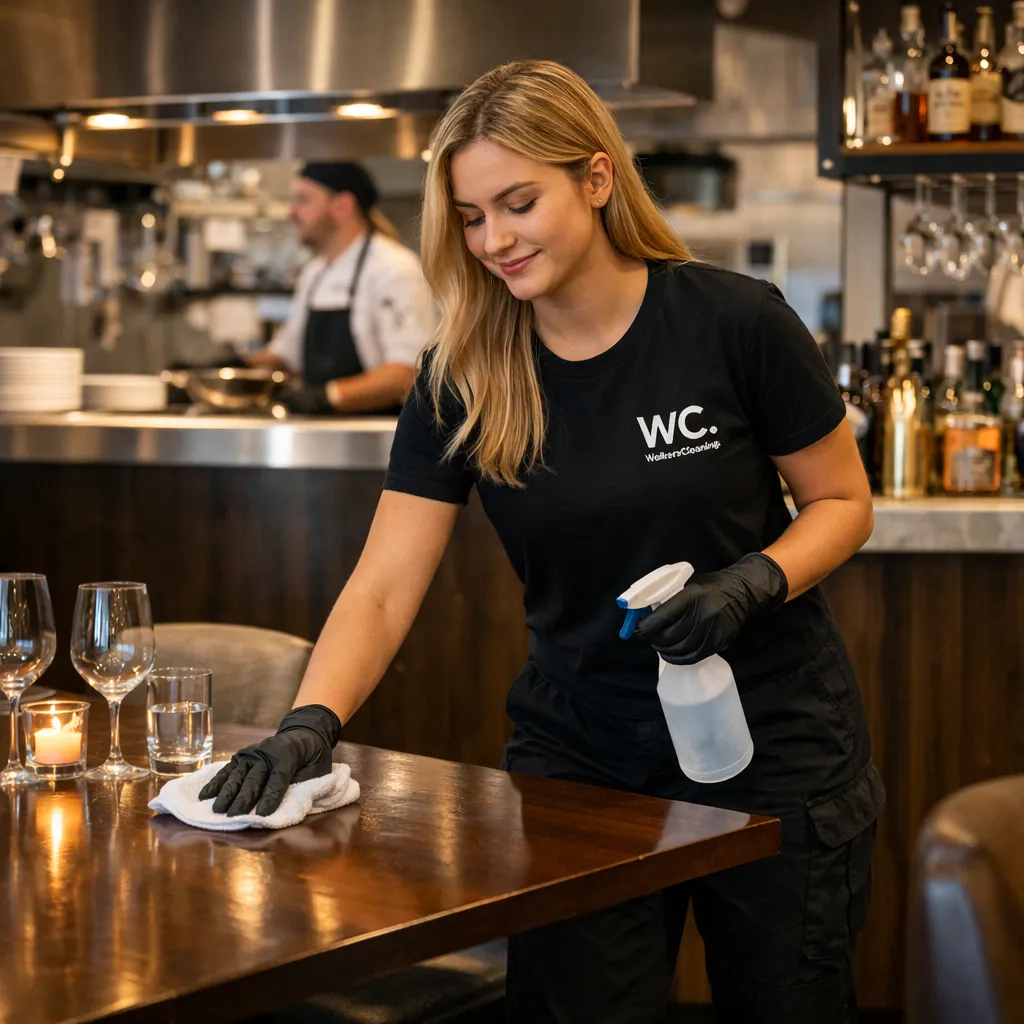
Patrons judge your venue within seconds of walking through the door. Smudged glass or greasy floors can ruin an otherwise perfect meal. In Sydney’s competitive hospitality scene, pristine front-of-house and back-of-house cleaning are essential for reputation and compliance.
Front-of-house spaces like dining rooms, bars and restrooms require meticulous, visible cleaning. Back-of-house kitchens, prep areas and storage demand rigorous sanitation and degreasing to meet food safety standards. Following a structured opening and closing routine ensures your venue stays spotless, safe and welcoming.
Front-of-House Priorities
Front-of-house (FOH) is where guests spend their time, so visible cleanliness is non-negotiable. Wipe tables, chairs, menus and high chairs after each customer. Polish glassware, windows and mirrors. Sweep or vacuum floors regularly and spot clean spills immediately to prevent slips. Restrooms are part of the FOH experience: clean toilets and basins several times a day, restock soap and paper goods and check for odours. A tidy, odour-free bathroom sets the tone for the entire venue.
Back-of-House Priorities
Back-of-house (BOH) includes kitchens, prep areas and storage. These spaces require strict sanitation to meet food safety laws and avoid cross contamination. Degrease grills, exhaust hoods and fryers daily to prevent fire hazards. Sanitise cutting boards, benches and utensils after each task. Store raw and cooked foods separately and clean cool rooms and shelving regularly. Use colour-coded cloths and mops to distinguish FOH and BOH cleaning tools. Train staff to wear appropriate PPE and follow chemical safety data sheets.
Opening and Closing Cleaning Routines
Structured routines help staff prepare the venue before service and reset it afterwards.
Pre-opening tasks
- Inspect dining and bar areas for overnight dust and wipe all surfaces.
- Set tables with clean cutlery, glassware and linens.
- Sanitise bars, coffee machines and point-of-sale terminals.
- Restock condiments, napkins and menus.
- Check restrooms for cleanliness, odours and supplies.
Post-close tasks
- Degrease cooktops, ovens and exhaust hoods.
- Sweep and mop kitchen and dining floors.
- Sanitise fridges, cool rooms and storage shelves.
- Clean and polish glass doors, windows and display cabinets.
- Dispose of rubbish and food waste and secure bins against pests.
Restroom Presentation and Odour Control
Restrooms leave a lasting impression. Clean toilets, urinals, basins and mirrors several times a day, especially during busy service periods. Refill soap, paper towels and toilet paper before they run low, and empty bins regularly. Use air fresheners or odour-neutralising products, but never as a substitute for cleaning. Ensure good ventilation so moisture doesn’t linger and floors dry quickly. A spotless restroom reassures patrons that the kitchen is just as clean.
Sustainable Cleaning Products
Choosing sustainable products protects your staff, patrons and the environment. Look for GECA-certified cleaners that avoid carcinogens, phosphates and volatile organic compounds. These products perform just as well as conventional cleaners but reduce indoor air pollution and waterway contamination. Safe, effective products also demonstrate your commitment to health and sustainability – an increasingly important value for diners.
How Walkers Cleaning Helps
Walkers Cleaning provides tailored cleaning for Sydney’s restaurants, pubs and cafés. We understand the difference between FOH presentation and BOH sanitation. Our teams follow structured opening and closing routines, use GECA-certified products and wear appropriate PPE. We can train your staff in daily hygiene tasks and handle after-hours deep cleans. Visit our hospitality cleaning page, browse our homepage or get in touch through our Contact page to discuss your venue’s needs. We also adhere to SafeWork NSW advice for cleaning dining and kitchen areas and follow NSW Health hygiene guidelines.
|
Zone |
Front-of-house standard |
Back-of-house standard |
|
Floors |
Polished and free of debris |
Degreased, non-slip and free of hazards |
|
Surfaces |
Wiped after each customer |
Sanitised and degreased regularly |
|
Equipment |
Presentable for customers |
Deep cleaned and maintained |
|
Restrooms/staff facilities |
Stocked and odour-free |
Cleaned and hygienic for staff |
|
Storage |
Organised and tidy |
Regularly audited for expiry and cleanliness |

FAQs
Cleaners you can count on. We show up when we say we will and leave nothing to chance. Trained, police checked, and supervised. Expect the same high standard every time.
How often should tables and menus be cleaned?
Tables, chairs and menus should be wiped after each customer and given a thorough clean at the end of service. Digital ordering devices should also be sanitised regularly.
What’s the difference between sanitising and degreasing?
Sanitising uses chemicals to reduce germs to safe levels, while degreasing removes built-up fats and oils. Kitchens need both to be safe and compliant.
How can we control restroom odours in a busy venue?
Clean toilets and basins frequently, empty bins before they overflow and use odour-neutralising products. Good ventilation helps moisture dissipate and prevents mould.
Why use GECA-certified products in hospitality?
GECA-certified cleaners avoid toxic ingredients, protect indoor air quality and show your commitment to sustainability. They deliver professional results without harming staff or patrons.
Can cleaning occur during service?
Quick wipe-downs of spills and table resets should happen immediately. However, deep cleaning and degreasing tasks are best done before opening or after closing to avoid disturbing diners.
Maintain five-star hygiene from the dining room to the kitchen with Walkers Cleaning. Visit our hospitality cleaning page, check our homepage for testimonials, or get in touch through our Contact page to discuss your venue’s needs.
Request a quote
Walkers Cleaning provides customised plans and experienced staff. We’ll handle daily, weekly and monthly tasks so you don’t have to. Request a quote and ask for our cleaning checklist.
Disclaimer: This article provides general guidance. Each strata complex is unique; confirm responsibilities and schedules in writing.