Poor office hygiene directly increases employee absenteeism. When shared surfaces harbour bacteria and viruses, staff get sick more often, productivity drops, and costs climb. The good news? This is a solvable problem that office managers can address with targeted, practical steps.
The $600-per-employee cost hiding in your office

Do you know what absenteeism actually costs your business? Most office managers don’t track it properly, but the figure sits around $600 per employee annually when you factor in lost productivity, replacement costs, and workflow disruption.
Here’s what that looks like in practice. One sick employee doesn’t just lose their own output. Their absence delays projects, forces colleagues to cover urgent tasks, and creates bottlenecks that ripple through the week. If you’re paying someone $50 per hour and they’re off for two days, that’s $800 in direct wages. Add the time colleagues spend picking up slack, the meetings that get postponed, and the deadlines that shift, and you’re well past $600.
Now connect that to office hygiene. A single contaminated keyboard in a meeting room can spread a cold virus to three people by Wednesday. Those three people take sick days the following week. Suddenly you’re looking at $1,800 in absenteeism costs from one unwashed surface. That money could fund a year’s worth of disinfectant wipes, hand sanitiser stations, and proper cleaning protocols. Instead, it’s disappearing into preventable sick days.
Where illness actually spreads in your office (it’s not the toilets)
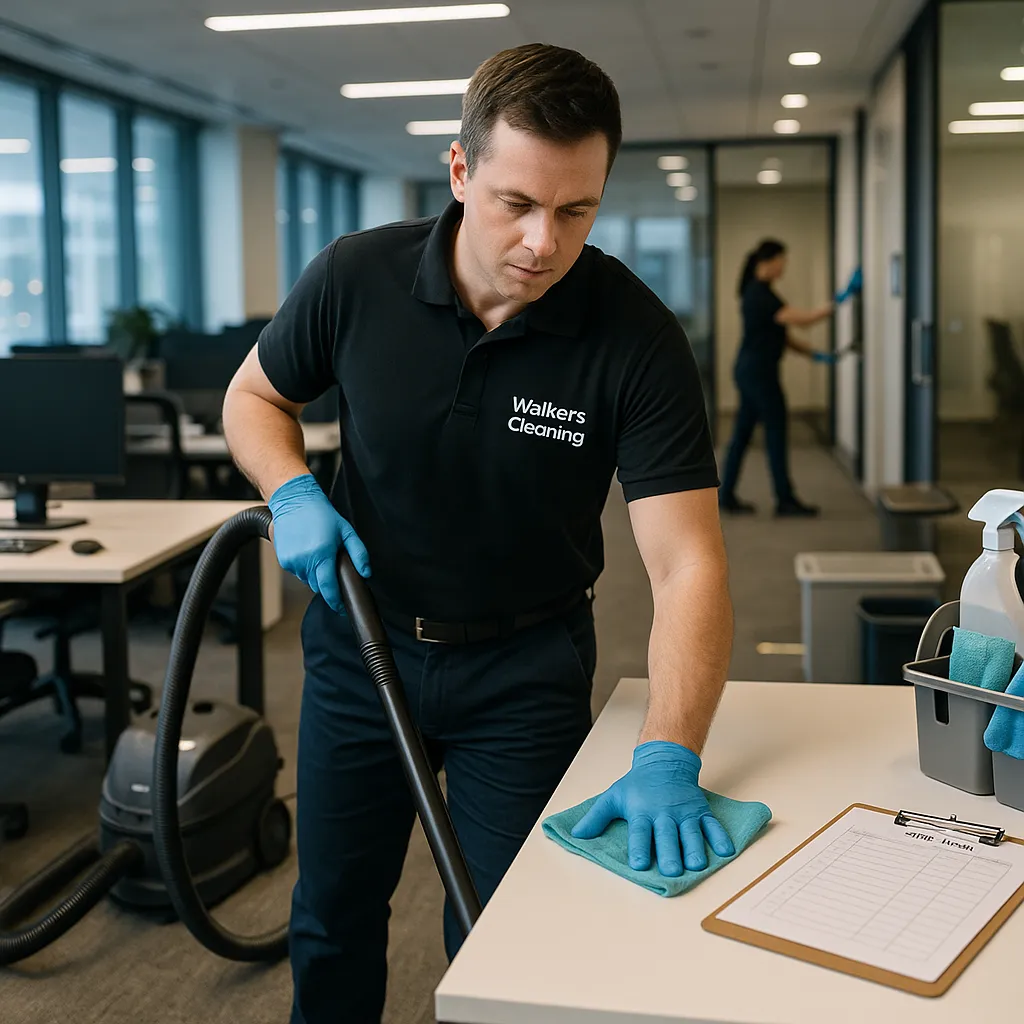
Most office managers assume toilets are the dirtiest areas and focus cleaning budgets there. They’re wrong. The real contamination zones are the places staff touch constantly throughout the day: kitchen sinks, shared electronics, and personal desk items that cleaners never go near.
Your standard cleaning contract probably covers toilets thoroughly. What it doesn’t cover are the surfaces that actually transmit illness between employees. Let’s look at where the problems really sit.
Kitchen sinks: 100,000 times more bacteria than your toilet seat
Kitchen sinks are germ factories. Research shows that kitchen sinks have 45% Coliform contamination compared to just 9% on bathroom faucet handles. Even more concerning, more than 75% of dish sponges and rags harbour Coliform bacteria, including E. coli and Salmonella.
The transmission path is straightforward. Multiple staff use the same sponges and cloths to wash their coffee mugs and lunch containers. Those sponges sit damp in the sink, breeding bacteria. Someone wipes down the counter with a contaminated cloth, then touches the kettle handle, then returns to their desk and uses their keyboard. By afternoon, that bacteria has spread to three workstations.
The kitchen sink can contain up to 100,000 times more germs than a toilet. Yet most offices replace toilet cleaning supplies weekly while letting the same kitchen sponge sit for a month.
Shared electronics and door handles: 3-day virus survival zones
Viruses don’t die quickly on hard surfaces. They can survive on plastic surfaces like keyboards and remotes for up to 3 days. That means one sick employee touching a shared keyboard on Monday can infect a colleague who uses the same meeting room on Wednesday.
The most-touched shared items in your office are meeting room remotes, printer touchscreens, door handles, and lift buttons. These get used dozens of times daily, yet they’re rarely included in standard cleaning contracts. Your cleaner empties bins and vacuums floors. They don’t wipe down the printer screen between uses.
This isn’t the cleaner’s fault. It’s a contract scope issue. If you want shared electronics sanitised, you need to specify it explicitly or assign responsibility to staff.
The desk items your cleaners never touch
Standard cleaning services skip personal items entirely. That includes keyboards, mice, phones, desk organisers, and coffee mugs. These items belong to individual employees, and cleaners are typically instructed not to touch them.
The problem? Smartphones carry 10 times more bacteria than a toilet seat. Keyboards accumulate crumbs, dust, and skin cells. Desk phones get sneezed on and never wiped down.
There’s a gap between what office cleaners are contracted to clean and what actually spreads illness. Closing that gap requires either expanding your cleaning contract or assigning responsibility to staff. Most offices do neither, which is why sick days keep climbing.
If you’re unsure where to start, Walkerscleaning can help you identify the gaps in your current cleaning protocols and design a hygiene plan that actually addresses contamination zones.
Your 4-week hygiene protocol (that actually gets followed)
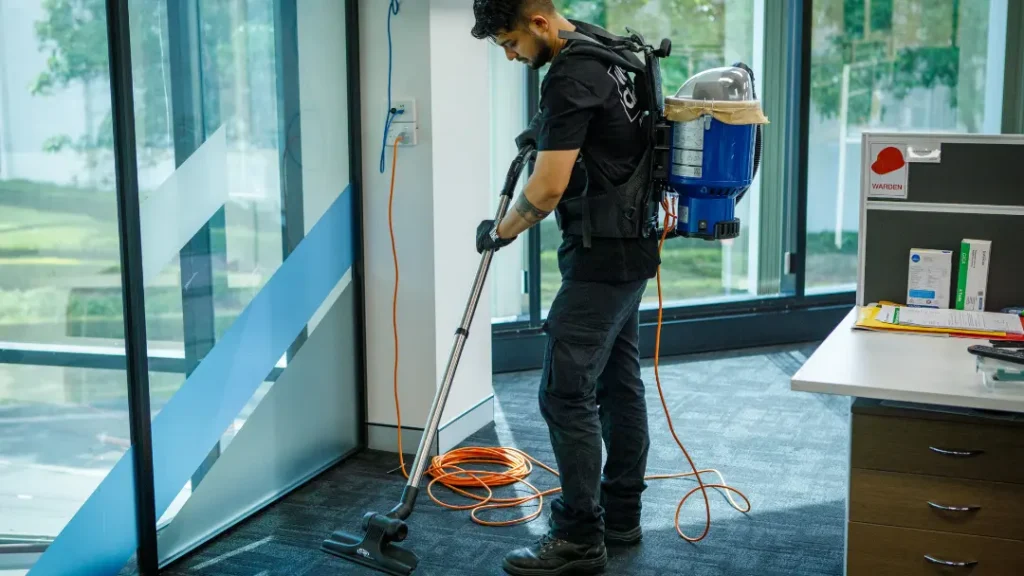
Most hygiene initiatives fail because they’re too complex or require too much behaviour change at once. This protocol is different. It’s realistic, step-by-step, and builds sustainable habits over four weeks without requiring a massive budget or disrupting daily operations.
Each week builds on the previous one. By Week 4, you’ll have a functioning system that staff actually follow.
Week 1: Map your contamination points and assign ownership
Walk your office with a notepad. Identify every shared touchpoint: door handles, light switches, printer screens, meeting room remotes, kitchen taps, fridge handles. Write them all down.
Now create three categories. First, items your cleaners already handle. Second, items staff should handle themselves. Third, items no one currently handles. That third category is where illness spreads.
Assign specific ownership for each category. Your facilities team might take responsibility for sanitising shared electronics weekly. Individual staff might commit to wiping their own keyboards and phones daily. Team leads might oversee kitchen hygiene.
Take photos of problem areas. You’ll use these later to track improvement.
Week 2: Install the three supplies that reduce transmission by 40%
You need three things: hand sanitiser stations at entry points, disinfectant wipes at shared workstations, and touchless bins in kitchens. Routine handwashing reduces respiratory illnesses by 16–21%, and having supplies within arm’s reach makes compliance far more likely.
Place one sanitiser station per 15 employees. Put wipe dispensers next to printers, in meeting rooms, and beside shared equipment. Install touchless bins in the kitchen so staff aren’t touching lids after handling food waste.
This doesn’t require a huge budget. For a 50-person office, you’re looking at under $200 total. That’s a fraction of what you’ll save in reduced sick days.
Week 3: The 5-minute daily routine for shared spaces
Implement a simple end-of-day routine. Wipe down shared electronics. Replace kitchen sponges twice weekly. Sanitise door handles and light switches. The whole process takes five minutes.
Understand the difference between cleaning, sanitising, and disinfecting. Cleaning removes dirt, sanitising lowers germs, and disinfecting kills germs. For most shared surfaces, sanitising is sufficient. For high-risk areas like kitchen sinks, disinfecting matters.
Rotate responsibility among team members rather than assigning it to one person. When everyone owns a small piece, the system stays functional even when someone’s on leave.
Five minutes daily prevents the need for deep cleans and eliminates the sick day costs that come from neglected surfaces. For guidance on maintaining consistent cleaning standards, see our article on Track Cleaning Performance Commerical Cleaning Sydney.
Week 4: Track your sick day baseline and adjust
Establish a simple tracking system. Count sick days this month and compare them to the same month last year. If you see a drop, your protocol is working. If not, identify which areas still have issues.
Look at where sick employees sit. If one team has higher absenteeism, their workspace might need more attention. Run a quick staff survey asking what hygiene supplies or protocols they’d actually use. You’ll often find simple fixes you hadn’t considered.
Don’t expect perfection. Frame this as continuous improvement with measurable progress. A 20% reduction in sick days is worth thousands of dollars annually.
When clean offices stop being clean

Protocols that work in Week 1 often fail by Month 3. Supplies run out and don’t get reordered. Responsibility becomes unclear as staff turnover happens. People simply forget.
The sustainability challenge is real. But maintaining protocols costs far less than ongoing sick days. Remember that $600-per-employee figure? Keeping your hygiene system alive requires maybe $50 per employee annually in supplies and a few hours of management time.
Schedule a monthly 10-minute hygiene check-in. Walk the office, check supply levels, ask staff what’s working and what isn’t. Small, consistent efforts prevent backsliding.
If you need expert help maintaining a professional cleaning standard that actually reduces absenteeism, 2026 Commercial Cleaning Services Sydney offers tailored solutions for Sydney workplaces. For immediate support, contact Walkerscleaning to discuss how a structured cleaning programme can protect your team’s health and your bottom line.