
Your office carpets should last eight years. Most fail at three.
The difference isn’t the carpet quality. It’s not foot traffic. It’s the maintenance approach you choose in month one, not the emergency cleaning you schedule when stains appear.
Facility managers face this decision constantly: replace worn carpets every three years at $12,000, or invest in scheduled maintenance that extends lifespan to eight years or longer. The numbers favour maintenance, but most offices still default to reactive replacement. That pattern costs Australian businesses thousands in avoidable capital expenditure.
This isn’t about buying premium carpets or restricting access to high-traffic areas. It’s about understanding how damage compounds, what scheduled intervention actually costs, and why the maintenance investment pays for itself within the first replacement cycle you avoid.
The $12,000 question most facility managers get wrong

Photo by cottonbro studio on Pexels
You’re three weeks from a major client visit. Your reception carpet looks tired. The high-traffic corridor shows visible wear paths. Your options: emergency cleaning that might help temporarily, or a $12,000 replacement that resets the clock.
Most facility managers choose replacement. Not because it’s cheaper over time, but because reactive cleaning hasn’t worked. The carpets still look worn after professional cleaning. Stains reappear within weeks. The investment feels wasted.
This creates a predictable cycle: install new carpets, vacuum regularly, call cleaners when problems become visible, replace carpets when cleaning stops working. Three years later, you’re back at $12,000.
The pattern isn’t unique to your office. It’s industry-wide. And it stems from a fundamental misunderstanding about when carpet damage actually occurs.
Why Sydney office carpets fail at the 3-year mark
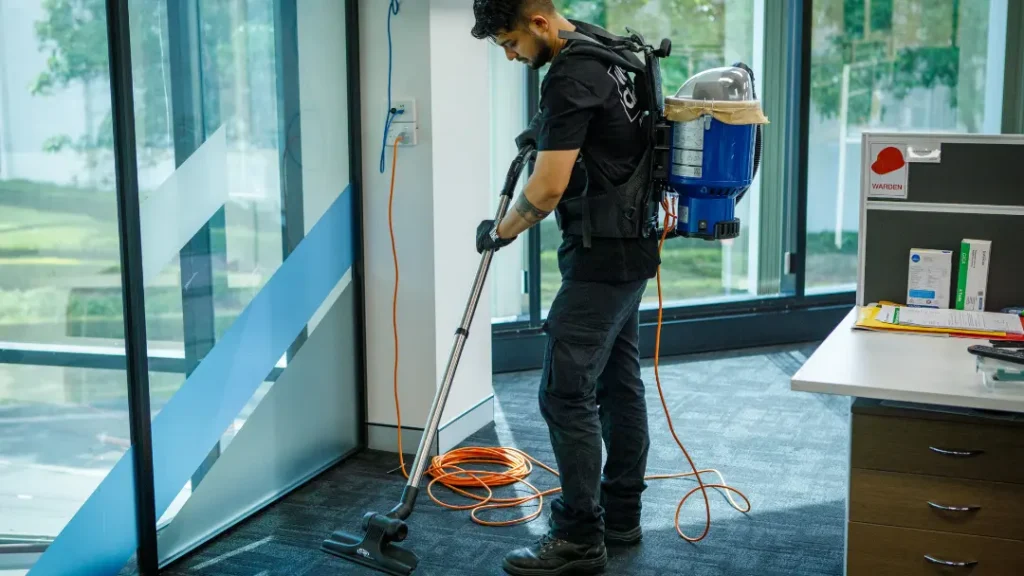
Carpet damage doesn’t announce itself. By the time wear paths become visible, the fibres are already compromised. The dirt you can see is the symptom. The grit you can’t see is the cause.
Reactive cleaning waits for visible problems. That’s too late. The damage happens in the 18 months before stains appear, when embedded grit grinds against fibres with every footstep. Surface vacuuming removes loose dirt but leaves the abrasive particles that cause permanent wear.
This isn’t a failure of effort. Most offices vacuum daily. They spot-clean spills immediately. They hire professional cleaners for periodic deep cleans. But these interventions target surface-level problems while the underlying damage accelerates.
The $12,000 replacement cost isn’t inevitable. It’s the result of maintenance that responds to damage rather than preventing it. For more on how to structure effective cleaning schedules, our Track Cleaning Performance Commerical Cleaning Sydney guide covers performance monitoring in detail.
Foot traffic compounds faster than you think
A reception area with 200 daily visitors doesn’t wear twice as fast as a back office with 100 visitors. It wears exponentially faster.
Each footstep grinds existing dirt deeper into fibres. The first 50 visitors deposit grit. The next 50 compress it. The next 100 turn it into an abrasive layer that damages fibres with every subsequent step. By month 18, the damage accelerates dramatically. By month 24, it’s visible. By month 30, it’s irreversible.
Compare this to a back office with 20 daily visitors. The grit accumulation is slower. The compounding effect is delayed. These carpets might last five years with the same reactive approach that destroys reception carpets in three.
The difference isn’t carpet quality. It’s the exponential relationship between foot traffic and embedded grit. High-traffic areas need intervention before damage becomes visible, not after.
The grit accumulation cycle that reactive cleaning misses
Surface vacuuming removes the dirt you can see. It doesn’t remove the grit embedded in carpet backing. That grit acts like sandpaper, fraying fibres from the inside out.
The cycle works like this: grit accumulates in the first six months, fibres begin to fray in months 6-12, dirt bonds to damaged fibres in months 12-18, visible wear appears in months 18-24. By the time you notice the problem, the damage is done.
Deep extraction removes embedded grit before it causes fibre damage. It doesn’t wait for visible problems. It prevents the cycle from starting.
This doesn’t mean surface vacuuming is useless. Daily vacuuming removes loose dirt and prevents surface-level staining. But it’s insufficient alone. Without periodic deep extraction, the grit accumulation cycle continues regardless of how often you vacuum.
What scheduled maintenance actually costs (and saves)

Photo by RDNE Stock project on Pexels
The annual maintenance investment for a typical Sydney office runs approximately $2,400. That covers quarterly deep extraction, monthly high-traffic zone treatment, and annual fibre protection reapplication.
Over five years, that’s $12,000 in maintenance costs. The same amount as one carpet replacement. Except the maintained carpets last eight years, not three.
The math shifts dramatically when you extend the timeline. With maintenance, you spend $19,200 over eight years ($2,400 annually) plus one $12,000 replacement at year eight. Total: $31,200. Without maintenance, you replace carpets every three years: $12,000 at year three, another $12,000 at year six, another at year nine. Total: $36,000 over nine years, and you’re due for another replacement.
According to research on preventive maintenance, this approach can reduce costs by 12-18%. The savings come from extended replacement cycles, reduced emergency cleaning, and fewer spot treatments.
Breaking down the 18-25% cost reduction
The cost reduction comes from three sources. First, extended replacement cycles. Instead of replacing carpets every three years, you replace them every eight to ten years. That’s two avoided replacements per decade, or $24,000 in deferred capital expenditure.
Second, reduced emergency cleaning. When carpets are maintained preventively, you don’t face pre-client-visit panic cleaning or urgent stain removal. Those emergency callouts cost 2-3 times standard rates and rarely deliver lasting results.
Third, improved energy efficiency. Well-maintained carpets provide better insulation, reducing heating and cooling costs. Studies show that structured maintenance programs can improve energy efficiency by 5% to 10%. For carpets, the impact is smaller but measurable, particularly in ground-floor offices with concrete subfloors.
These percentages aren’t inflated. They’re conservative estimates based on documented maintenance ROI across facility management applications.
The 5-year extension math: $2,400 annual spend vs. $12,000 replacement
Let’s calculate the eight-year total cost with maintenance. You spend $2,400 annually for eight years: $19,200. At year eight, you replace the carpets: $12,000. Total: $31,200.
Compare that to the reactive approach. You replace carpets at year three ($12,000), year six ($12,000), and year nine ($12,000). That’s $36,000 over nine years, and you’re immediately facing another replacement cycle.
The net saving is approximately $16,800 over eight to nine years. And that’s before accounting for the time value of money. The maintenance costs are spread evenly across eight years. The replacement costs hit in large, disruptive lump sums that strain capital budgets.
This math assumes you start the maintenance schedule with new or relatively new carpets. If your carpets are already four years old with visible wear, the calculation changes. More on that later.
Three maintenance intervals that deliver the extension
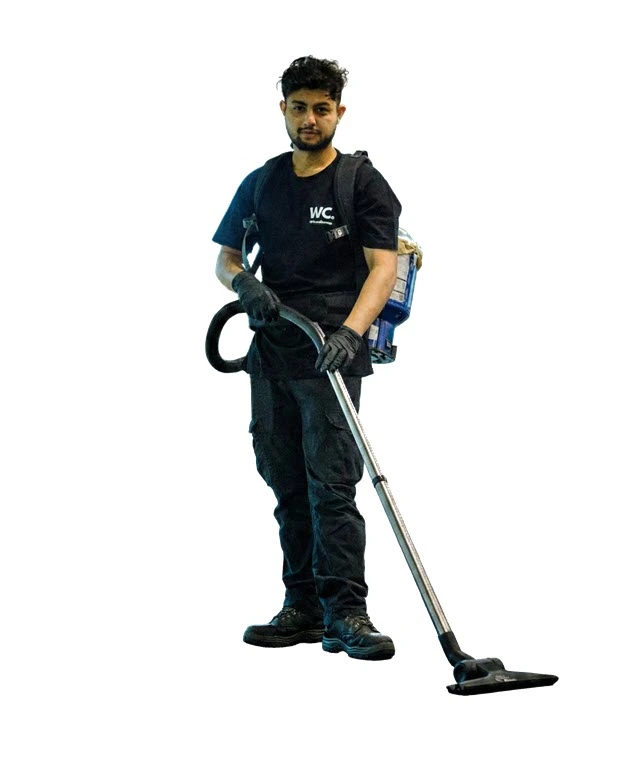
The five-year extension comes from a three-tier maintenance schedule. These aren’t optional extras. They’re the minimum interventions required to prevent the grit accumulation cycle and extend carpet lifespan to eight years or longer.
Each interval targets a different damage mechanism. Quarterly deep extraction removes embedded grit. Monthly high-traffic zone treatment prevents the 80/20 problem where 20% of carpet area takes 80% of wear. Annual fibre protection reapplication maintains the barrier that prevents soil bonding.
This schedule works for most Sydney offices. High-traffic environments might need more frequent intervention. Low-traffic offices might extend some intervals. But these three tiers form the foundation.
Quarterly deep extraction (not surface cleaning)
Hot water extraction removes the embedded grit that surface vacuuming misses. It injects heated cleaning solution deep into carpet fibres, then extracts it along with dissolved dirt and abrasive particles.
Schedule this every three months for the entire carpeted area. Not just high-traffic zones. The grit accumulation cycle affects all carpets, just at different rates.
This is different from daily or weekly vacuuming, which continues as normal. Vacuuming removes surface dirt. Quarterly extraction removes embedded grit. Both are necessary.
DIY extraction machines don’t deliver the same results. Professional equipment generates higher water temperatures, stronger suction, and more thorough extraction. The difference is measurable in carpet lifespan. For comprehensive cleaning strategies, see our 2026 Commercial Cleaning Services Sydney overview.
Monthly high-traffic zone treatment
High-traffic zones include entrances, reception areas, corridors, and lift lobbies. These areas take exponentially more wear than the rest of your office.
Treat these zones monthly with spot extraction or encapsulation cleaning. This prevents the 80/20 problem where a small percentage of carpet area accounts for the majority of visible wear.
You don’t need to treat the entire office monthly. That’s unnecessary and costly. Focus on the zones where foot traffic compounds fastest. This targeted approach delivers maximum protection at minimum cost.
Annual fibre protection reapplication
Factory-applied stain protection wears off within 12-18 months. Without reapplication, soil bonds directly to fibres, making quarterly extraction less effective.
Reapply fibre protection annually, immediately after deep cleaning. This creates a barrier that prevents soil bonding and makes subsequent cleaning more effective.
This isn’t a miracle coating. It won’t prevent all stains or eliminate the need for regular cleaning. But it’s a critical part of the maintenance system. Without it, the other interventions deliver diminishing returns.
When replacement still makes more sense than maintenance
Maintenance works best when started early. If your carpets are already four years old with visible wear paths, permanent staining, or water damage, replacement is probably the better choice.
The maintenance approach prevents damage. It doesn’t reverse it. Once fibres are frayed, stains are set, or backing is compromised, no amount of scheduled cleaning will restore the carpet to acceptable condition.
Start the maintenance schedule immediately after new carpet installation. That’s when the investment delivers maximum return. The first quarterly extraction prevents the grit accumulation cycle from starting. The first annual protection application maintains factory-applied barriers before they wear off.
For most Sydney offices, this approach delivers the five-year extension and significant cost savings. The $2,400 annual investment pays for itself in the first replacement cycle you avoid. After that, it’s pure savings.