
You ring a carpet cleaner expecting a simple price per square metre. Instead, you get questions about foot traffic, carpet type, business hours, and access restrictions. Some cleaners won’t quote over the phone at all.
This isn’t evasiveness. Professional carpet cleaning quotes involve genuine complexity because commercial environments create conditions that vary wildly from one site to the next. A 500-square-metre office in Surry Hills faces different challenges than the same-sized retail space in Parramatta, even if both have identical carpet specifications.
Understanding what cleaners assess before quoting helps you distinguish between legitimate professionals and operators who lowball to win the job, then inflate costs once they’re on site. The assessment process reveals how seriously a cleaner takes their work.
Why Two Quotes for the ‘Same’ Job Can Differ by Thousands
Two quotes for a 500-square-metre office space: one for $800, another for $2,500. Same carpet area. Wildly different prices.
The cheaper quote likely assumes best-case conditions. Light soiling. Easy access. Standard business hours. No furniture moving. Basic steam clean, in and out.
The higher quote accounts for what’s actually there. Heavy traffic patterns near lifts and entrances. Stains around workstations. After-hours access required. Pre-treatment for high-soil zones. Furniture relocation. Protective treatment post-clean.
Commercial carpets endure punishment residential carpets never see. Continuous heavy foot traffic means dirt, allergens, and spills accumulate faster and penetrate deeper. A reception area with 200 people passing through daily needs fundamentally different treatment than a home lounge room.
Price differences reflect different scopes of work, not arbitrary profit margins. The question isn’t which quote is cheaper. It’s which one accurately reflects the job.
The Site Assessment: What Happens Before Numbers Hit the Page
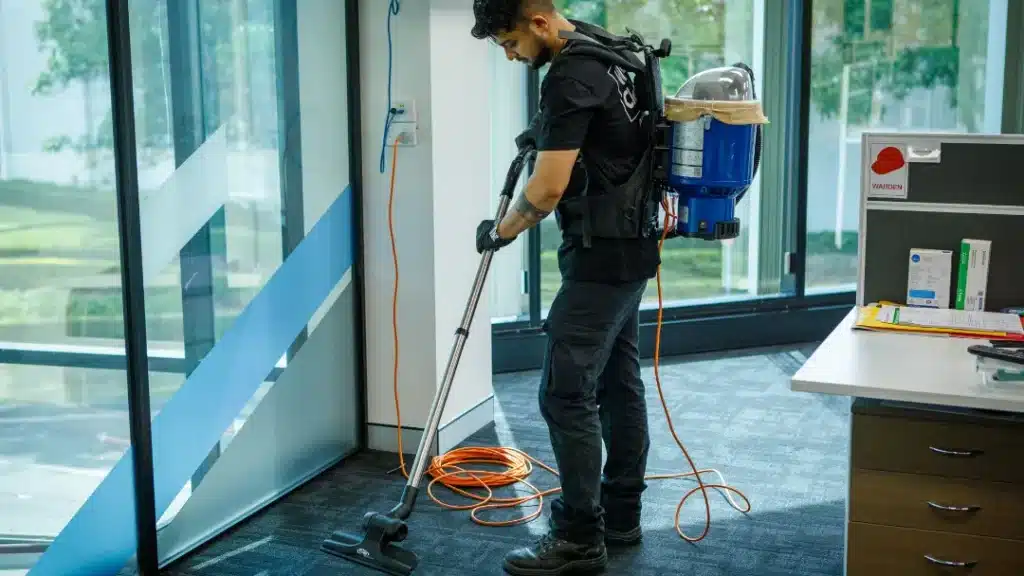
Reputable cleaners assess in person. They walk the space, take notes, ask questions about your operations. Phone quotes based on square meterage alone are guesswork dressed up as pricing.
The walkthrough follows a systematic process. Professionals assess three main categories: carpet condition, cleaning method requirements, and logistical factors. Each category contains variables that directly affect cost and approach.
This isn’t bureaucracy. It’s how you avoid a cleaner arriving with the wrong equipment, underestimating the time required, or damaging carpet because they didn’t verify fibre type. The assessment protects both parties.
Carpet Type and Fibre Construction
Commercial carpets are typically low-pile, tightly woven synthetic fibres built for durability. They’re engineered to withstand punishment, unlike residential plush carpets designed for comfort.
Fibre type determines which cleaning methods are compatible. Some fibres can’t handle high heat. Others react poorly to moisture. Wool requires different treatment than nylon or polypropylene.
Professionals check manufacturer specifications and warranty requirements. Many commercial carpet warranties stipulate approved cleaning methods. Use the wrong approach and you void the warranty. Misidentify the fibre type and you risk permanent damage—shrinkage, colour bleeding, texture distortion.
This is why experienced cleaners verify before quoting. They’re not being pedantic. They’re avoiding expensive mistakes.
Traffic Patterns and Soil Load
Cleaners map your space. High-traffic zones—entrances, corridors, areas around workstations—versus low-traffic zones like boardrooms or storage areas.
Traffic patterns determine treatment intensity. A reception area carpet might need triple the pre-treatment and cleaning passes compared to a boardroom used twice weekly. The soil load isn’t evenly distributed, so the cleaning approach shouldn’t be either.
Commercial carpets accumulate dirt, dust, spills, and allergens faster than residential because foot traffic never stops. By the time visible soiling appears, the damage is already deep in the fibres. Professionals assess soil load to determine pre-treatment requirements and the number of passes needed.
Existing Damage, Stains, and Odour Sources
Professionals document pre-existing damage before quoting. Burns, tears, permanent stains, worn patches. This sets realistic expectations and avoids liability disputes when they can’t magically restore carpet that was already compromised.
Stain type and age determine whether removal is possible and what specialty treatments are required. Fresh coffee spills respond differently than six-month-old wine stains. Some stains are permanent. Honest cleaners tell you this upfront.
Odour sources require different approaches than surface cleaning. Pet accidents, mould, decomposing spills—these need enzyme treatments or antimicrobial solutions, not just extraction. Odour removal significantly affects pricing because it’s labour-intensive and requires specialty products.
Professional services eliminate stubborn stains and odours more effectively than DIY methods, but they don’t promise miracles. The assessment is about honest evaluation, not optimistic claims.
The Equipment and Method Decision Tree
Assessment findings directly determine which cleaning method and equipment the job requires. Professionals match method to carpet type, soil level, and business constraints rather than using one-size-fits-all approaches.
Commercial cleaning involves industrial-grade equipment and high-powered extraction unlike residential methods. The equipment isn’t just bigger—it’s fundamentally more capable, reaching higher temperatures and extraction pressures.
Method selection is the primary cost driver. Understanding why cleaners choose specific methods helps you evaluate whether a quote reflects appropriate planning or corner-cutting.
When Low-Pile Commercial Carpet Gets Industrial-Grade Extraction
Steam cleaning uses heated water to loosen dirt and grime deep in carpet fibres. High-powered extraction then removes the water along with dissolved soil, allergens, dust mites, and bacteria.
Heavily soiled commercial carpets benefit from this deep-cleaning approach. It’s thorough. It’s effective for removing contaminants that affect indoor air quality.
The trade-off is drying time. Expect 4 to 24 hours depending on carpet type, humidity, and airflow. This affects scheduling and pricing because you need to plan around operational downtime.
Professional-grade equipment is significantly more powerful than rental machines costing $40 to $60 per day. The difference isn’t subtle. It’s the difference between surface cleaning and genuine extraction.
Why Some Facilities Need Dry Cleaning Despite Higher Per-Square-Metre Costs
Dry cleaning uses minimal moisture and specialized compounds to absorb dirt. Carpets are dry almost immediately—usually within an hour.
This method is necessary in specific scenarios. 24/7 operations that can’t afford downtime. Moisture-sensitive environments like server rooms or archives. Delicate carpet fibres that can’t handle wet extraction.
Dry cleaning costs more per square metre, but it eliminates downtime costs that can exceed the cleaning fee itself. A medical facility that can’t close patient areas for 12-hour drying periods will pay more for dry cleaning and still come out ahead.
It’s not always about the cleaning cost. It’s about total operational impact.
The Downtime Factor: How Business Hours Shape Method Selection
Cleaners assess whether work must occur after-hours, on weekends, or during business hours. This isn’t just scheduling preference—it forces method selection.
A 9-to-5 office might use dry cleaning to avoid disrupting the next business day. A weekend-accessible space can use steam extraction because drying time doesn’t matter.
After-hours work commands premium pricing due to labour costs and scheduling complexity. This is legitimate. You’re paying for convenience and operational continuity.
Commercial carpets often need quarterly or monthly deep cleaning, making downtime planning crucial. If your business can’t afford regular closures, method selection becomes constrained.
The Hidden Variables That Separate a $500 Quote from a $2,000 One
Beyond method selection, several itemisable factors dramatically affect final pricing. Transparent quotes break down these variables. Vague quotes hide them until the job is underway.
Understanding these factors helps you evaluate quote legitimacy and compare apples to apples. Two quotes might list the same square meterage and method but differ by $1,500 because one includes variables the other conveniently omits.
Pre-Treatment Requirements for High-Traffic Zones
Heavily soiled areas require specialty pre-treatment products and additional dwell time before main cleaning. This affects both material costs and labour time.
In commercial settings with continuous foot traffic, pre-treatment is often non-negotiable for acceptable results. Entrance matting areas might need degreasing treatment. Workstation zones might need spot treatment for coffee and food spills.
Skipping pre-treatment is a common corner-cutting tactic. It produces inferior results that look acceptable immediately but don’t last. Professional cleaning includes deep methods to effectively remove dirt from carpet fibres, not just surface appearance.
Furniture Moving and Site Access Complexity
Quotes vary based on whether the client moves furniture or the cleaner does, and the volume and weight involved. Moving 50 office chairs is different from moving 10 desks with cable management.
Access challenges affect pricing. Multi-storey buildings without service lifts. Parking restrictions requiring hand-carrying equipment 200 metres. Narrow corridors. Security protocols requiring escorts.
Commercial sites often have loading dock protocols, restricted access windows, or security requirements that add complexity. These aren’t excuses for price padding—they’re real operational constraints.
Some quotes exclude furniture moving entirely, creating hidden costs when the cleaner arrives. Transparent quotes specify what’s included and what’s not.
Post-Clean Protection and Maintenance Scheduling
Professional services often include optional protective treatments—stain guards, fibre sealants—that extend carpet life. These aren’t upsells for the sake of it. They genuinely prolong carpet life and reduce the need for frequent replacements.
Maintenance scheduling affects pricing. One-off jobs cost more per visit than quarterly contracts because there’s no relationship continuity or scheduling efficiency.
High-traffic commercial areas need cleaning every 3 to 6 months. Some quotes include follow-up maintenance. Others price it separately. Understanding this helps you evaluate total cost of ownership, not just initial outlay.
If you’re looking for a cleaner who provides transparent, itemised quotes and genuinely understands commercial environments, Walkerscleaning specialises in commercial carpet cleaning across Sydney with upfront pricing and systematic assessment processes.
What a Detailed Quote Actually Tells You About the Cleaner
Quote transparency directly correlates with professional standards. Detailed quotes indicate systematic assessment. Vague quotes indicate guesswork or intentional ambiguity.
Red flags: vague line items like “cleaning services.” Reluctance to itemise when asked. Significant price changes after the site visit. Phone quotes without inspection. No mention of method or equipment.
Green flags: itemised breakdown showing labour, materials, equipment, and method. Justification for method selection based on carpet type and conditions. Timeline specificity. Clear exclusions. Warranty terms. Insurance verification.
Understanding what professionals assess helps you distinguish legitimate operators from cheap alternatives who win jobs with low quotes then inflate costs once committed. The assessment process isn’t bureaucracy. It’s professionalism.
Request itemised quotes. Ask about method selection rationale. Verify insurance and certifications. These aren’t difficult questions, but they separate professionals from operators who hope you won’t ask.