Even with regular cleaning, your building may still harbour unexpected germ hotspots. Many businesses rely on commercial cleaning in Sydney teams to maintain hygiene, due to the areas that remain overlooked because people don’t think to check them. Lift buttons, air conditioning grilles, touchscreen directories, and even meeting room remotes can harbour significant bacterial loads.
This guide highlights the surprising places where bacteria thrive in commercial buildings and shows you how to approach cleaning with a smarter, more targeted strategy.
Why Bacteria Survive Longer in Summer Conditions
As the Sydney sun beats down, it creates a five-star resort for bacteria and viruses. The combination of increased heat and humidity provides the perfect conditions for microbes to thrive and multiply.
Materials like glass, stainless steel, plastic, and rubber, common in any office or retail space, can retain active bacteria for significantly longer periods in a warm, humid climate. A study on microbial growth shows that keeping surfaces dry is a key factor in limiting proliferation, a challenge that intensifies during Sydney’s humid summer months.
This environment enables germs to coincide with increased human activity. More people are out and about, bringing a greater diversity of microbes into your building. The transfer of these germs from hands to surfaces accelerates, creating a perfect storm for potential outbreaks.
High-Touch Hidden Hotspots in Commercial Buildings
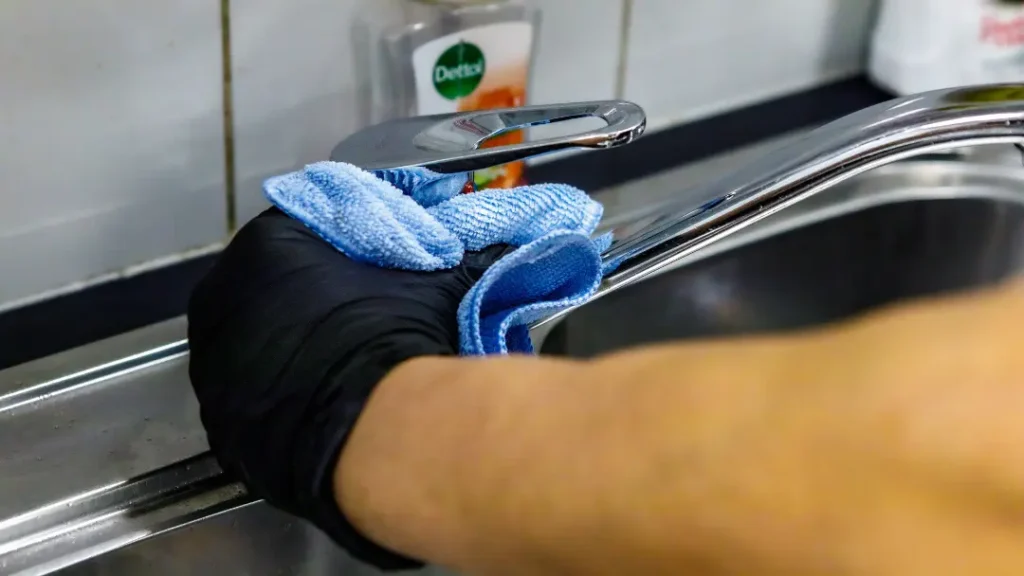
We often think of ‘high-touch’ areas as the obvious culprits: door handles, light switches, and reception desks. While these are certainly important, the most hazardous hotspots are frequently the ones we don’t even register touching.
These are the small, shared surfaces contacted by dozens, if not hundreds, of different people each day. Think about the buttons in the lift, the keypad on the security door, or the tracks of a sliding glass door that people push to open.
These seemingly insignificant points of contact are masters of disguise, accumulating germs while escaping the notice of routine cleaning schedules focused on larger, more visible areas.
The speed at which contamination can occur is startling. Research has demonstrated that a harmless virus placed on a single surface can spread to over 50% of common workplace surfaces within just four hours.
| Hidden Hotspot | Contamination Insight | Health Implication |
|---|---|---|
| Office Desk & Phone | Fosters over 10 million bacteria, 400 times more than a toilet seat. | Direct contact points for hands, face, and mouth, increasing infection risk. |
| Lift Buttons | Touched by countless individuals daily, accumulating a diverse range of microbes. | A primary vector for transmitting germs between floors and departments. |
| Microwave & Fridge Handles | Food particles and moisture create an ideal breeding ground for bacteria. | High risk of cross-contamination and foodborne illnesses in shared spaces. |
Neglecting areas like these creates a false sense of security. A visually clean office can still be a minefield of germs if the cleaning protocol doesn’t account for these less obvious, high-traffic points.
Shared Commercial Facilities: The Germ Zones You Expect but Still Underestimate
It comes as no surprise that shared kitchens, bathrooms, and meeting rooms are focal points for germs. Yet, many businesses underestimate just how deep and widespread the contamination in these areas can be.
A quick wipe-down might create peace of mind, but it often fails to address the resilient microbial communities thriving just out of sight.
Shared Kitchens and Break Rooms
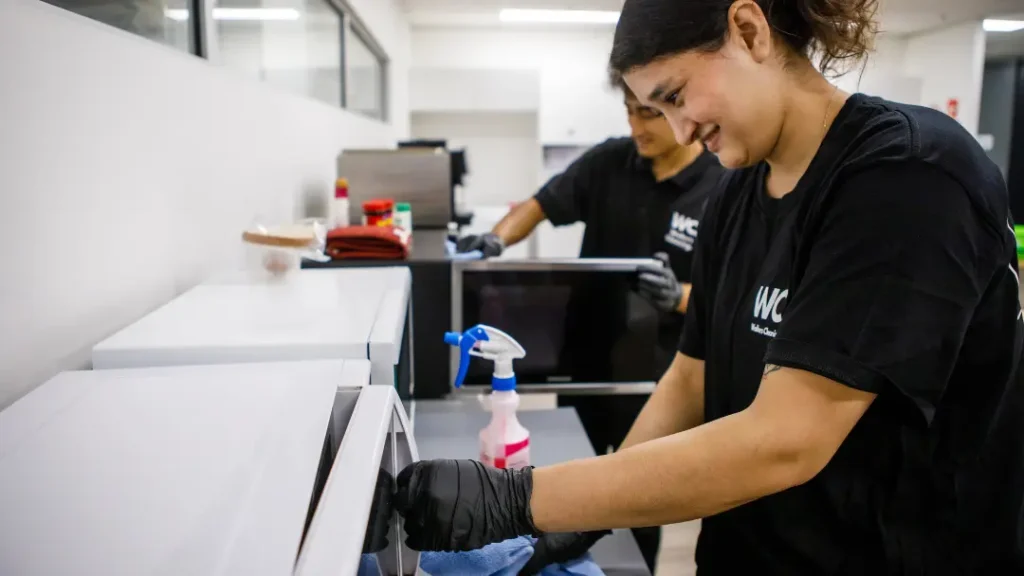
The office kitchen is where the social life of the workplace holds firm, but it’s also a hotspot for microbial activity. While the sink and benchtops get regular attention, germs congregate on less obvious surfaces.
The keypad and handle of the microwave, the office fridge door, coffee machine buttons, and even the edges of benchtops are prime real estate for bacteria. With a typical office desk harbouring 400 times more bacteria than a toilet seat, imagine the accumulation in a space where food is prepared and consumed by the entire team.
Reducing contamination in these high-risk zones involves more than a simple wipe. It requires an increased cleaning frequency, especially during peak times like lunch. Using disinfectants specifically formulated to kill germs, rather than just general-purpose cleaners, is essential.
The process should always include first cleaning with soap and water to remove dirt and grime, then applying a disinfectant to kill the remaining pathogens.
Bathrooms
Most cleaning routines cover the basics in commercial bathrooms: toilets, sinks, and floors. However, germs are experts at finding sanctuary in all corners. The tops of sanitary bins, flush buttons, the grout between tiles, and the edges where the floor meets the wall are often missed, allowing bacteria and mould to flourish.
Many people hold a misconception that the toilet itself is the dirtiest part of a restroom, but shared touchpoints like dispenser buttons and door locks often carry a heavier bacterial load.
Actionable cleaning strategies must go deeper. This means using specialised tools to scrub grout lines and paying close attention to floor edges where moisture and grime collect.
Modern sanitation equipment can also play a role. The installation of touchless taps, soap dispensers, and flush mechanisms can reduce the number of contaminated surfaces, breaking the chain of transmission and elevating the standard of hygiene.
Meeting Rooms and Conference Spaces
When a team gathers in a meeting room, they share more than just ideas. Remote controls for screens, shared keyboards and mice, chair armrests, and even whiteboard markers become communal property, passed from hand to hand.
In these enclosed spaces, germs can spread with incredible efficiency. One person’s cough or sneeze can release up to 40,000 droplets that travel across the room, settling on every available surface and lingering in the air.
Maintaining hygiene here requires a structured approach, usually starting with scheduled sanitisation of all high-touch surfaces between meetings. This includes wiping down the table, chairs, remotes, and any shared equipment with a suitable disinfectant.
A cleaner meeting space doesn’t just feel more professional but results in a healthier workforce. By reducing the transmission of germs, businesses can help lower the incidence of workplace illness, which is directly linked to an estimated $260 billion in annual productivity losses.
The Out-of-the-Box Places Germs Hide in Commercial Buildings (Most People Never Think About)
Beyond the usual suspects, a whole other category of germ hotspots exists. These are the out-of-the-box locations that almost never make it onto a standard cleaning checklist, yet they can be significant reservoirs of dust, bacteria, and allergens.
Consider the sensors on automatic doors. Every person entering your building triggers them, but who ever cleans them?
Air conditioning grilles and vents are another classic example. They circulate air, but in the process, they trap dust, pollen, and airborne microbes, which are then periodically blown back into the workspace.
Even the backs of security passes and the lanyards they hang on accumulate oils and germs from daily handling. Neglecting these spots can undermine even the most diligent cleaning efforts elsewhere, contributing to poor indoor air quality and creating a persistent source of contamination.
Integrating these forgotten areas into a comprehensive cleaning routine is essential for achieving a truly spotless and hygienic environment.
How Commercial Cleaning in Sydney Targets These Hidden Hotspots
Tackling hidden germ hotspots takes more than routine dusting. It requires targeted methods used by teams specialising in commercial cleaning in Sydney, who focus on high-risk areas that standard cleaning often misses.
Electrostatic disinfecting is one of the most effective tools. It releases a charged disinfectant mist that wraps around surfaces, coating every side, including spots traditional spray-and-wipe cannot reach such as the underside of desks or chair frames.
Different materials also need different treatments. Fabric chairs and partitions may require steam cleaning, while touchscreens and electronics are handled with non-corrosive solutions. Air vents are treated with antimicrobial products to stop spores circulating through the building.
These approaches form part of a more adaptive cleaning system, where frequency and methods shift during peak foot-traffic periods or flu season to control risk throughout the year.
Mitigate Germs with Professional Commercial Cleaning Sydney
Commercial buildings accumulate germs in far more places than most teams expect. Lift buttons, touchscreen panels, meeting room equipment, air vents, and shared kitchen surfaces can all hold significant bacterial loads, especially during Sydney’s warm, humid months. Addressing these overlooked zones takes more than routine wipe downs and is where commercial cleaning Sydney teams make a clear difference.
A targeted approach that includes electrostatic disinfecting, steam cleaning for fabrics, and proper treatment of vents is essential for reducing illness and improving workplace hygiene.
For a cleaning plan that actually covers these hidden hotspots, Walkers Cleaning can tailor a service to your building and its daily use. Get in touch to keep your workplace genuinely clean, healthy, and ready for your team year-round.