
You approved a cleaning contract 12 months ago. The price was clear, the scope seemed straightforward, and the monthly invoice matched your budget. Then you check this month’s bill and it’s grown 30% without any obvious changes to your facility or service level.
This happens more often than you’d think. Not because cleaning companies are dishonest, but because vague contract language creates room for interpretation to shift over time. What started as “general cleaning” gradually expands to include tasks nobody explicitly agreed to. Small additions accumulate. Costs drift upward.
You’ll learn exactly where these hidden costs hide and how to spot them before you sign. This is about prevention and early detection, not fixing disasters after they’ve blown your budget.
Why cleaning contracts hide costs (and how they get away with it)

Photo by RDNE Stock project on Pexels
Most hidden costs aren’t intentional fraud. They’re the result of vague language that allows interpretation to shift as circumstances change. A phrase like “maintain cleanliness standards” means different things to different people. Six months in, your provider might interpret it more broadly than you intended.
Cleaning contracts get less scrutiny than IT or security agreements because cleaning is often seen as straightforward work. You wouldn’t sign a software contract without understanding exactly what’s included, but cleaning agreements slip through with phrases like “as needed” or “general maintenance” that nobody questions until the invoice arrives.
Scope creep happens gradually. Budget variances of 5-10% are early warning signs that your contract scope is expanding without formal approval. The problem is that these small increases feel manageable at first. By the time you notice, you’re paying significantly more than you budgeted.
Verbal agreements create the perfect environment for costs to expand. Your cleaner mentions the bins are overflowing, so they add an extra service. You ask them to wipe down a meeting room after a big presentation. These informal requests become regular expectations, then they appear on your invoice as standard charges.
This isn’t about painting cleaning companies as villains. It’s a contract clarity issue both parties can fix with better documentation and clearer approval processes.
The three places hidden costs live in your contract
Pull out your current contract and look for these three specific areas. Each one represents a common place where costs hide in plain sight. You’re not just looking for problems—you’re checking whether the language is specific enough to prevent disputes later.
Vague scope language that expands over time
Phrases like “general cleaning”, “as needed”, and “maintain cleanliness standards” sound reasonable until you try to measure them. What does “general cleaning” actually include? Does it cover bins and surfaces only, or does it extend to windows, walls, and equipment?
Compare these two descriptions:
“Maintain floor cleanliness” versus “Vacuum all carpeted areas twice weekly and mop hard floors daily in high-traffic zones.”
The first version leaves room for interpretation. The second version creates a clear yes/no checklist you can verify. If your cleaner vacuums once weekly instead of twice, you can point to the contract. With “maintain floor cleanliness”, you’re arguing about subjective standards.
Test your contract’s scope clarity this way: can you create a checklist from each service description? If you can’t turn it into specific tasks with defined frequencies, the language is too vague. That vagueness will cost you later when “general cleaning” morphs into additional services you didn’t budget for.
Don’t try writing contracts yourself. Focus on what to ask your provider to clarify. Request specific task lists, defined frequencies, and measurable standards for each service area.
Exclusions buried in service descriptions
What’s NOT included matters more than what is, because exclusions become surprise charges later. Your contract might list “bathroom cleaning” as a service, but if it excludes restocking supplies, you’ll receive separate invoices for toilet paper, soap, and paper towels every month.
Common exclusions to watch for:
“Excludes consumables” means you’re paying separately for cleaning products, bin liners, and restocking items. “Excludes equipment maintenance” means repairs or replacements for vacuums and floor machines hit your budget as extras. “Excludes deep cleaning” means the regular service covers surface-level work only—periodic intensive cleaning costs more.
Consumables are items that get used up and need regular replacement: cleaning chemicals, paper products, bin liners, hand soap. Deep cleaning refers to intensive periodic work like carpet shampooing, high dusting, or detailed equipment cleaning that goes beyond daily maintenance.
Create a two-column list before signing: what’s included versus what’s excluded. Look for gaps between them. If bathroom cleaning is included but restocking isn’t, you’ve found a hidden cost. If floor maintenance is included but equipment repairs aren’t, budget for those separately.
Rate adjustment clauses with no caps
A clause stating “rates subject to annual review” or “CPI adjustments” sounds standard until you realise it means unlimited increases without your approval. The difference between “may increase rates with 60 days notice” and “increases capped at CPI + 2% annually” is substantial over time.
Calculate this example: You’re paying $5,000 monthly for cleaning. With uncapped 8% annual increases, you’ll pay $189,747 over three years. With increases capped at 3% annually, you’ll pay $185,454 over the same period. That’s $4,293 in additional costs from a single vague clause.
Longer projects face higher scope creep risks due to evolving business conditions and changing priorities. Multi-year cleaning contracts need tighter rate protection than annual agreements because there’s more time for costs to drift upward.
Don’t avoid rate adjustments entirely—inflation is real and providers need to cover rising costs. Focus on negotiating reasonable caps and approval rights. Insist on specific percentage limits, adequate notice periods, and the option to terminate without penalty if increases exceed agreed thresholds.
Red flags in your current invoices that signal scope creep
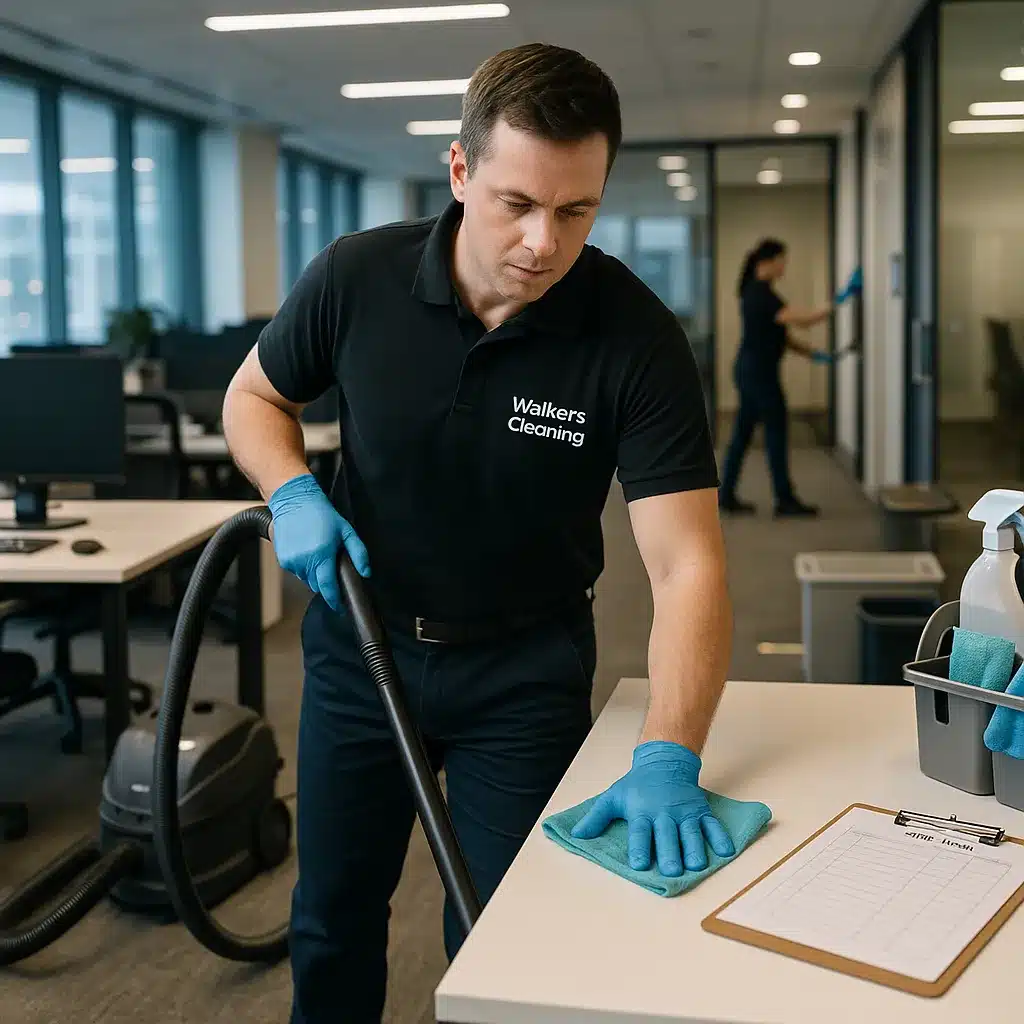
You can audit your invoices in 10 minutes each month to catch problems early. Scope creep is the unauthorised expansion of deliverables, and it shows up in invoices before it shows up in your budget reports.
Compare your current invoice to the one from three to six months ago, line by line. Don’t wait for annual contract reviews—these checks should happen monthly when problems are still small and easy to address. For more guidance on maintaining service quality, see our approach to Track Cleaning Performance Commerical Cleaning Sydney.
Line items that weren’t there three months ago
Watch for charges labelled “additional site visit”, “special cleaning”, “equipment hire”, or “consumables surcharge”. These often start small—$50 to $100—so they don’t trigger immediate questions. But they accumulate quickly.
Track this with a simple spreadsheet. List all line items from each month’s invoice in columns. New additions become immediately visible when you scan across rows. If “equipment hire” appears in March but wasn’t there in January or February, you need to ask why.
Establish this rule: any new line item requires written approval before it appears on an invoice. Not all new charges are wrong—some are legitimate responses to changing needs. But they need your authorisation first, not after the fact.
Frequency changes you didn’t authorise
Daily cleaning becomes twice-daily. Weekly deep cleans become fortnightly with “touch-ups” added between them. These frequency changes often happen verbally when your cleaner notices something needs more attention.
The cost impact is immediate: changing from weekly to twice-weekly doubles that line item cost. If you’re paying $200 weekly for a service, unauthorised frequency changes push it to $400 weekly—an extra $800 monthly you didn’t budget for.
Document agreed frequencies in a simple table and check each invoice against it. If the contract says “vacuum twice weekly” but you’re being charged for daily vacuuming, you need an explanation and formal approval for the change.
This isn’t about blaming cleaners for being helpful. It’s about needing formal approval processes for changes that affect your budget.
Labour hours climbing without explanation
If your facility hasn’t changed size or use patterns, labour hours shouldn’t increase significantly. Yet 20 hours per week can become 24 hours over six months with no new areas added to the scope.
Gradual increases are harder to spot than sudden jumps. A 20% increase over six months feels less alarming than a 20% increase in one month, but the budget impact is identical. Track hours per square metre or hours per room to measure efficiency over time.
Don’t immediately accuse providers of padding hours. Ask for explanations and documentation of why hours increased. Sometimes legitimate reasons exist—higher staff turnover requiring more training time, or seasonal factors affecting cleaning speed. But you need to understand and approve these changes, not discover them on your invoice.
Questions to ask before signing (or renewing) any cleaning contract

These questions separate clear contracts from problematic ones. Good providers welcome them because they want clarity too. Asking before you sign gives you leverage—after signing, you’re negotiating from weakness.
Take notes on the answers and request written confirmation in the contract. This isn’t confrontational. It’s professional due diligence that protects both parties from misunderstandings later.
What happens when we need something outside the scope?
You’re testing whether they have a clear change order process. Formal change management helps control scope by documenting what’s changing, why it’s changing, and what it costs.
A good answer includes: written quotes required for all out-of-scope work, a clear approval threshold (any amount over $X needs formal sign-off), a timeline for providing quotes (within 48 hours of request), and how changes are invoiced (separate line item, not buried in regular charges).
A bad answer sounds like: “We’ll just add it to your invoice” or “We’ll work it out as we go.” These responses guarantee disputes later when you receive charges you didn’t explicitly approve.
Ask for a sample change order form during contract negotiations. If they don’t have one, that’s a red flag. Don’t accept verbal agreements for out-of-scope work—insist on documented processes.
How do you handle rate increases during the contract term?
You’re looking for specific caps, notice periods, and approval rights, not vague promises to “keep it reasonable”. What does reasonable mean when your costs are climbing?
Good language looks like this: “Rate increases limited to CPI annually, with 90 days written notice and option to terminate without penalty if increase exceeds agreed cap.”
Multi-year contracts need stronger protections than annual agreements because there’s more time for market conditions to shift. Ask what their actual rate increases have been for existing clients over the past three years. If they’ve averaged 6% annually but they’re offering you a 3% cap, that’s worth understanding.
Don’t accept “market rate adjustments” without defining what that means and capping it. Market rates vary widely depending on who’s measuring them.
What’s your change order process and approval threshold?
You need to know at what dollar amount they’ll seek approval versus just adding charges. Without thresholds, small charges accumulate into significant costs without your knowledge.
A clear answer might be: “Any change over $100 requires written approval. Changes under $100 require email confirmation. Emergency work (defined as health/safety issues requiring immediate attention) can proceed with verbal approval, followed by written confirmation within 24 hours.”
Consider establishing that all changes require approval regardless of amount, with emergency exceptions clearly defined. This creates more administrative work, but it prevents the slow drift of unauthorised charges that eventually blow your budget.
Don’t assume they have a formal process. Many smaller providers work informally, which creates problems as the relationship continues. If they don’t have documented processes, work with them to create one before signing.
Protecting your budget starts before the first invoice
Hidden costs are preventable with clear contracts and monthly monitoring. You’ve seen where they hide: vague scope language, buried exclusions, and uncapped rate adjustments. You know what invoice red flags look like: new line items, unauthorised frequency changes, and climbing labour hours.
The three-step approach is straightforward: scrutinise contract language before signing, audit invoices monthly against agreed scope, and maintain documented approval processes for all changes. This requires upfront time investment, but early identification is less expensive than fixing problems after they’ve compounded for months.
For comprehensive service options and transparent pricing, visit our homepage or explore our 2026 Commercial Cleaning Services Sydney offerings.
Pull out your current contract today and check for the three hidden cost areas covered here. If you find vague language, buried exclusions, or uncapped rate clauses, schedule a conversation with your provider this week to clarify them. The conversation might feel awkward, but it’s significantly less awkward than discovering you’ve overpaid by thousands of dollars.