
You walk through the office and notice the pathways near workstations have turned dark. The areas by the windows look faded. The carpet’s only two years old, but it already looks tired.
This isn’t unusual, especially with busy office cleaning in Sydney routines that focus on quick results instead of long-term carpet protection. Most facility managers expect commercial carpet to last a decade, maybe less. But properly maintained commercial carpet can last up to 20 years. The gap between what you’re getting and what’s possible comes down to a handful of preventable mistakes.
For expert guidance on implementing the right maintenance approach, Walkers cleaning specialises in commercial carpet care that extends lifespan rather than shortening it.
What’s Actually Wearing Down Your Carpet
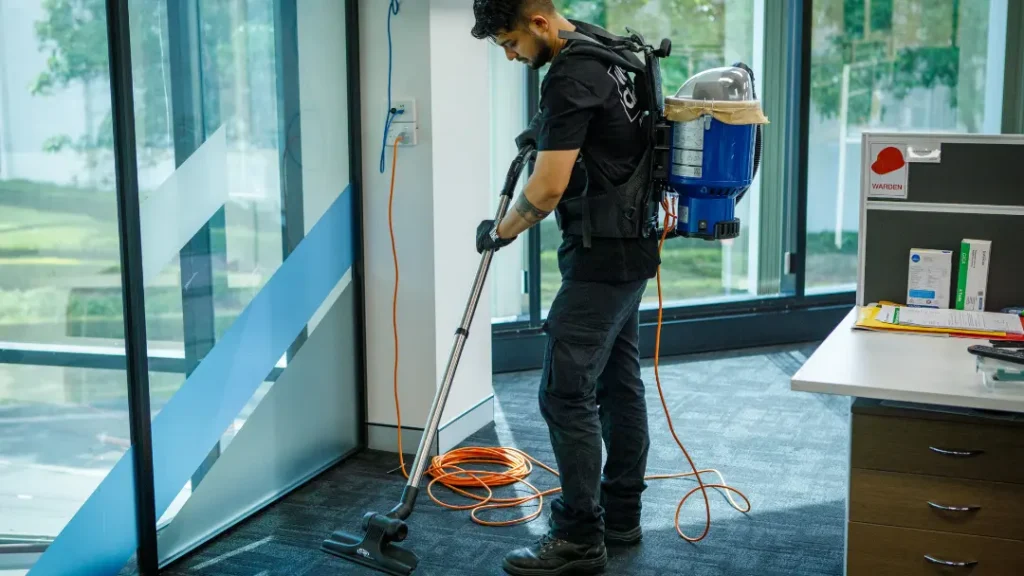
While carpets do wear with age, that isn’t the sole reason they look a little beat up. We see that their are four specific, and more importantly, preventable factors that compound over time. Once you know what they are, you can stop them.
Traffic patterns create permanent pathways faster than you think
Walk from the lift to the kitchen. Same route every time, and the entire office does that repeatedly. Those footsteps compress carpet fibres in the same spots, day after day. The fibres flatten, they reflect light differently, and suddenly you’ve got visible dark trails across your floor.
These ‘cattle trails’ signal that routine vacuuming and deep cleanings aren’t happening frequently enough. Once fibres compress permanently, they don’t bounce back. Prevention starts with vacuuming before the trails form, affectively mitigating the problem before it starts.
Tracked-in chemicals from hard floors are destroying fibres
Your office cleaning in Sydney crew mops the hard floors with quaternary disinfectants. These strong products are super effective for obtaining those shiny tiles but can be devastating to your carpets.
People walk from the mopped floor onto the carpet. The chemicals transfer. Improperly rinsed quaternary disinfectants damage carpet fibres on contact. The fibres break down slowly, losing strength and appearance over months.
When was the last time you checked what’s being used on your hard floors? Most facility managers don’t think about it until the carpet starts looking rough.
Sunlight and office cleaning in Sydney products team up to fade colours
UV exposure alone usually isn’t the main issue. The bigger risk is sunlight plus the wrong cleaners. Harsh chemicals can strip factory coatings (UV, stain, anti-static), which leaves fibres exposed and makes fading quicker and patchier.
You’ll see it first near windows and bright sun spots. If those coatings are gone, that fade can spread and the contrast gets more obvious over time.
Stick with pH-neutral or wool-safe cleaners, gentle enzyme cleaners, and mild detergents. Avoid strong alkaline products, petroleum solvents, and heavy oxidisers. A diluted vinegar mix can be OK on some synthetics, but skip it on wool.
Chair casters crush pile height in high-use zones
Rolling office chairs create concentrated pressure points. Every time someone shifts their weight or rolls to reach a file, those small wheels compress the carpet pile. Much like your office’s foot traffic, the pile flattens permanently.
This damage makes carpets look years older than they are. It’s also the easiest problem to prevent, yet it’s the one most commonly ignored. Worth noting: most warranties exclude damage from rolling loads, so this becomes a financial issue for you.
The Cleaning Mistakes That Make Everything Worse
Common carpet cleaning mistakes usually come down to chemistry and moisture, and they tend to sneak in when everyone’s trying to do the right thing.
Strong alkaline or acidic cleaners can strip factory stain protection. Once that layer is gone, fibres grab dirt and stains faster, which leads to more frequent office cleaning and faster wear.
Cheaper products can also leave a sticky residue behind. That residue acts like a dirt magnet, so the carpet starts looking tired again within days.
And then there’s over-wetting. Heavy steam cleaning can soak the backing and slow drying, which increases the risk of mould and backing damage over time.
The First 90 Days: What You Should’ve Done Differently
Most carpet damage is preventable if you act immediately after installation. Even experienced facility managers miss these steps. The same principles can still help with existing carpets, though prevention is always easier than repair.
Why waiting to apply fibre protection costs you years of carpet life
Fibre protection should be applied immediately after installation, not after problems appear. Protection creates a barrier that prevents soil bonding and makes office cleaning in Sydney more effective.
Waiting even a few months allows dirt to embed in unprotected fibres permanently. You can reapply protection to existing carpets, but you can’t reverse damage that’s already happened.
The 15-foot entryway mat rule most offices ignore
You need 15 feet of walk-off matting to capture 80% of tracked-in dirt and chemicals. Most offices use 3-6 foot mats. That only captures a fraction of contaminants.
Inadequate matting means dirt travels directly to your carpet investment. Measure your current entryway mats. Do they meet the 15-foot standard? If not, you’re letting the problem walk right in.
Setting up a vacuuming schedule that actually prevents cattle trails
Vacuuming frequency should match traffic levels, not arbitrary schedules like ‘twice weekly’. High-traffic areas need daily vacuuming. Medium-traffic areas need it three times weekly.
Regular vacuuming prevents soil from being ground into fibres where it causes permanent damage. Don’t just vacuum more. Create a framework based on traffic zones. Map your office, identify high-traffic pathways, and adjust frequency accordingly.
How to Add 8-10 Years to Your Current Carpet

Your carpets may already show wear. It’s not too late. Commercial carpet can last up to 20 years with proper maintenance, versus the 10 years most facility managers plan for. These three actions deliver the highest impact immediately.
Switch to low-moisture encapsulation cleaning
Encapsulation cleaning is a low-moisture method that uses a cleaning solution which dries into a crystal-like residue around dirt, so it can be vacuumed away. It uses far less water than steam cleaning, dries faster, and is generally a better fit for busy workplaces.
The practical upside is simple: carpets can be back in use in roughly 20 to 30 minutes, not six to eight hours. Ask your current vendor if they offer encapsulation. If they don’t, it may be time to switch. Walkerscleaning uses low-moisture methods to extend carpet life while keeping disruption to a minimum.
Install chair mats before warranty-voiding damage appears
Chair mats also matter, and it’s best to install them before the carpet shows permanent wear.
They reduce the concentrated pressure from chair castors that crushes pile over time. Many carpet warranties exclude damage from rolling loads, so once it happens, the cost usually lands with you.
Schedule restorative cleanings based on traffic units, not calendar dates
‘Traffic units’ measure actual foot traffic volume, not arbitrary time periods. Light traffic is 100 units per day, moderate is 100-1000, heavy is 1000-10,000, and extra heavy exceeds 10,000.
High-traffic areas may need restorative cleaning every 3-4 months. Low-traffic areas need it annually. Periodic restorative cleanings during carpet’s midlife are essential for maintaining appearance and performance. Map your office into traffic zones and create a cleaning schedule that matches actual use patterns. For help implementing a data-driven maintenance programme, specialists can assess your traffic patterns and design a schedule that protects your investment.
Your carpets don’t need to look tired after two years. They need the right maintenance approach from day one. If you’re ready to extend your carpet’s lifespan and improve its appearance, professional commercial cleaning services can implement these strategies properly. Contact Walkers cleaning to discuss a maintenance plan that actually works.