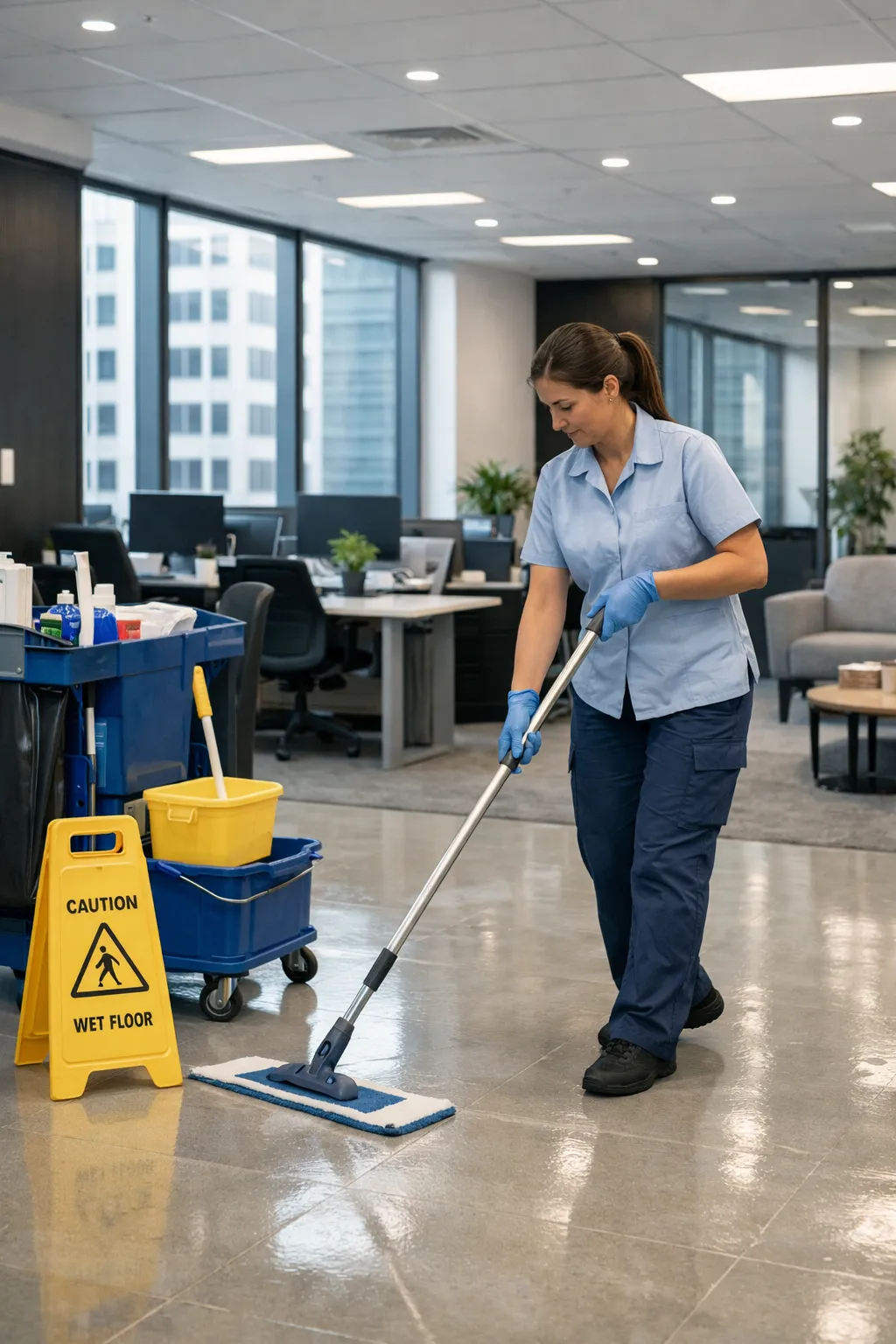
An immaculate office reflects well on your brand and supports staff wellbeing. But how often should different spaces be cleaned? Too little and hygiene suffers; too much and you’re wasting money. This guide offers a practical frequency plan for Sydney CBD offices.
Office cleaning frequencies vary based on usage and occupancy. Client‑facing spaces require daily attention, while storage rooms may need weekly or monthly cleaning. Shared kitchens and high‑traffic areas should be serviced more frequently to manage spills and waste. Tailor the plan to your office type and foot traffic.
- Reception, meeting rooms and washrooms should be cleaned daily.
- Desks and workstations benefit from weekly dusting and wiping.
- Kitchens and break areas require daily cleaning to prevent odours.
- Carpets and floors should be vacuumed daily and steam‑cleaned periodically.
- Adjust frequencies based on foot traffic and customer visits.

Client‑facing versus back office
Areas that clients or visitors see create an immediate impression of your professionalism. Reception desks, meeting rooms and washrooms should therefore be cleaned and disinfected daily. Ensure touch points like door handles, lift buttons and handrails are sanitised. Desks and workstations in back offices, by contrast, may require weekly wiping and dusting. Encourage staff to tidy their own spaces between professional cleans for better hygiene.
Shared kitchens and eating areas
Kitchens and break areas are magnets for spills, crumbs and odours. Clean these spaces daily: wipe surfaces, sanitise coffee machines, empty rubbish bins and mop floors. For offices with heavy foot traffic or food preparation, consider midday spot cleaning. This aligns with NSW Health’s advice to keep food preparation areas clean to reduce the risk of illness.
High‑traffic zones and touch points
Corridors, lifts and stairwells experience constant foot traffic. These should be vacuumed or swept daily, with deeper cleaning such as scrubbing or polishing conducted weekly or monthly depending on floor type. Door handles, light switches and railings are high‑touch surfaces; they should be sanitised daily to limit the spread of germs. SafeWork NSW recommends keeping walkways clear and storing work materials neatly to minimise hazards; regular cleaning supports these goals.
Types of offices and recommended frequencies
Different businesses have different cleaning needs. Client‑facing agencies, showrooms or medical offices require higher standards and more frequent services than back‑office administrative spaces. Use the table below as a guide, then adjust based on your specific operations.
|
Area |
Recommended frequency |
Why it matters |
|
Reception and lobby |
Daily |
First impression for clients and visitors |
|
Washrooms |
Daily |
Hygiene and odour control |
|
Meeting rooms |
Daily or after use |
Professional appearance and cleanliness |
|
Workstations |
Weekly |
Dust reduction and workstation hygiene |
|
Kitchens/break rooms |
Daily |
Food hygiene and spill management |
|
Windows (internal) |
Monthly |
Maintain natural light and appearance |
|
Flooring (vacuum/mop) |
Daily |
Dirt and dust removal |
|
Flooring (deep clean) |
Quarterly |
Remove stains and extend floor life |
Balancing cost and cleanliness
While daily cleaning improves hygiene, it may not be necessary for every space. Consider how many people use each area and what activities take place. For example, a call centre with high staff density and shared equipment benefits from daily sanitising, whereas an executive office with low foot traffic might only need weekly services. By tailoring the schedule, you maximise value without compromising health.
How Walkers Cleaning helps
Walkers Cleaning provides flexible office cleaning schedules for Sydney CBD businesses. Our team conducts site assessments to determine appropriate frequencies based on your layout and occupancy. We service public areas daily, schedule weekly dusting for back offices and offer monthly deep cleaning or window washing. See our office cleaning page and Sydney location details. For sparkling windows, we also offer window cleaning services. Have a specific requirement? Contact us for a customised plan.
FAQs
Cleaners you can count on. We show up when we say we will and leave nothing to chance. Trained, police checked, and supervised. Expect the same high standard every time.
How often should carpets be steam‑cleaned?
Generally, carpets benefit from professional steam cleaning every three to six months, depending on foot traffic and spills.
Is after‑hours cleaning more expensive?
Yes, after‑hours cleaning typically costs more due to security arrangements and labour rates. Discuss these factors when requesting a quote.
Can cleaners work around staff during business hours?
Professional cleaners can schedule tasks during quiet periods to minimise disruption. For noisy tasks like vacuuming, after‑hours may be preferable.
What about sanitising keyboards and phones?
These high‑touch items should be sanitised at least weekly, and more often during flu season. Consider providing sanitising wipes for staff.
Why partner with Walkers Cleaning?
We tailor our services to your office type, provide trained staff and maintain communication through dedicated account managers. Our team adheres to Australian hygiene guidelines and uses eco‑friendly products.
Request a quote
Optimise your office cleaning schedule with Walkers Cleaning. We’ll assess your workspace, recommend suitable frequencies and provide a comprehensive proposal. Request a quote today and receive our downloadable cleaning frequency checklist.
Disclaimer: This article offers general guidance. Cleaning requirements vary between offices and should be confirmed in writing.