
Most property managers assume DIY carpet cleaning saves money. The logic seems sound: hire equipment for $50, spend a Saturday morning cleaning, avoid a $250 professional invoice. Simple maths.
Except it rarely works that way. The upfront cost you see on the hire shop price tag isn’t the total cost. Not even close. When you factor in time, re-cleaning failures, extended vacancy periods, and lost rent, that $50 saving can easily become a $600 loss on your end of lease bond cleaning.
This isn’t about whether you’re capable of operating a carpet cleaner. It’s about whether the total real cost over time actually saves you money. For most property managers running portfolios, it doesn’t. Here’s why.
The $200 Carpet Clean That Actually Cost $847
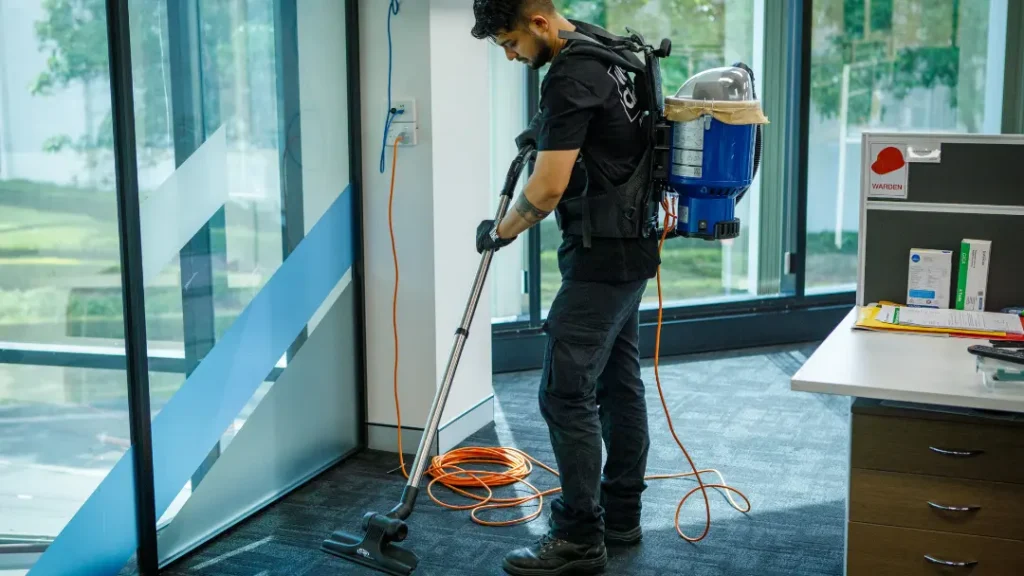
A property manager in Sydney’s inner west attempted DIY carpet cleaning during a rental turnover. The goal was straightforward: save the $280 professional quote and get the property back on the market faster.
She hired equipment for $45, bought cleaning solution for $35, and spent six hours cleaning a two-bedroom unit. The carpets looked better. Not great, but acceptable. She listed the property.
Three viewings later, no applications. Prospective tenants mentioned a lingering smell. She re-inspected and realised the carpets hadn’t dried properly. Moisture had created a musty odour that wasn’t obvious immediately after cleaning.
She pulled the listing, hired professionals for $280, and waited another four days for proper restoration and drying. The property sat vacant for an additional week. At $1,400 per month rent, that’s $322 in lost income. Add the original $80 in DIY costs, the $280 professional fee, and $165 in additional advertising costs.
Total: $847. The attempt to save $280 cost an extra $567.
What You See on the Price Tag
Photo by Victoria Emerson on Pexels
The problem starts with how we compare costs. You see the hire shop charging $45 for equipment. You see the professional quoting $250. The difference feels obvious.
But that comparison only includes what you pay upfront. It ignores everything that happens after you return the equipment. The re-cleaning. The delays. The lost rent. The time you spent that could have been used managing your portfolio.
Let’s look at both sides properly.
DIY: Equipment hire and supplies
For a standard two-bedroom property, you’re looking at:
- Carpet cleaner hire: $40–60 per day
- Cleaning solution: $20–35
- Protective equipment and additional supplies: $15–25
- Transport costs (fuel, time): $10–20
- Extra hire days if the job takes longer than expected: $40–60
Realistic total: $125–200. That’s just what you pay upfront. It doesn’t include your time, and it assumes everything goes perfectly the first time. It rarely does.
Professional: Quoted service fees
Professional carpet cleaning for a two-bedroom rental property typically costs $200–350, depending on condition and location. The quote is fixed. No surprise costs.
What’s included: labour, professional-grade equipment, cleaning solutions, stain treatment, and a guarantee of results. Most services complete the job same-day or next-day, with faster drying times due to commercial extraction equipment.
You make one phone call. They handle the rest. The property is ready to show within 24 hours.
The Costs That Only Show Up Later
The upfront comparison makes DIY look cheaper. But what happens when the carpets don’t pass your own inspection? Or when prospective tenants notice issues you missed? Or when the property sits vacant three extra days because you’re still waiting for carpets to dry?
These are the costs that flip the calculation. They’re also the ones most property managers don’t account for until it’s too late.
Re-cleaning failures: When DIY doesn’t pass inspection
Inexperienced cleaners commonly face: remaining stains, lingering odours, uneven cleaning, and over-wetting that damages carpet backing. You won’t always notice these issues immediately. Sometimes they only become obvious after the carpets dry, or when a prospective tenant points them out.
When DIY fails, you’re now paying for both attempts. Your $150 DIY cost plus the $280 professional fee you should have paid initially. You’ve also lost time re-scheduling and re-inspecting the property.
Poor tenant screening and property issues can compound these problems, as research shows that inadequate screening often leads to property damage and increased maintenance costs. If the previous tenant caused significant carpet damage, DIY methods rarely achieve the restoration needed to attract quality applicants.
Extended vacancy periods from delayed turnarounds
DIY carpet cleaning typically adds two to three days to your turnaround time. You need to collect equipment, learn how to use it properly, complete the cleaning, allow for extended drying time, and return the equipment.
If your property rents for $1,400 per month, three extra days costs $140 in lost rent. Professional services often complete the job in one day with guaranteed drying times, getting your property back on the market faster.
This matters more than you think. Vacancy costs and ineffective processes directly reduce profitability, and delays can push you into the next rental cycle, extending vacancy further. If you miss the weekend viewing window, you’re potentially adding another week of lost income.
Damage deposits you can’t claim due to incomplete restoration
If you attempt DIY cleaning and only achieve 70% restoration, you can’t legitimately claim full carpet cleaning costs from the tenant’s deposit. The tenant deposit might include $250 for professional carpet cleaning, but if you only spent $150 on DIY and the results are substandard, you’re in a weak position.
Professional invoices provide the documentation needed for deposit claims. They also protect you in disputes. If a tenant challenges your deposit deduction, you need proof that professional-standard cleaning was actually performed. A hire receipt and photos of your own work won’t carry the same weight.
Your Time Has a Price (Even If You Don’t Bill for It)
Here’s the question most property managers skip: what else could you accomplish in those six to eight hours?
Your time isn’t free. Even if you don’t bill yourself an hourly rate, the hours you spend cleaning carpets are hours you’re not spending managing your portfolio, conducting viewings, or growing your business. That’s opportunity cost, and it’s real.
Managing properties is a 24/7 responsibility that can consume significant personal time, as industry research confirms. Time spent on tasks that professionals can handle more efficiently is time you’re not investing in higher-value activities.
Hours spent on a single property vs. managing your portfolio
Realistic time investment for DIY carpet cleaning:
- Equipment collection: 1 hour
- Cleaning: 4–6 hours
- Equipment return: 1 hour
- Follow-up inspection: 1 hour
Total: 7–9 hours.
Professional service: 15-minute phone call to book, 30-minute inspection when complete. Total: 45 minutes of your time.
What could you do with those 7–8 hours? Conduct four property viewings that could fill other vacancies. Handle tenant communications across your entire portfolio. Coordinate maintenance for three other properties. Research market rents to optimise your pricing strategy.
Eight hours equals four property viewings. If one of those viewings results in a tenancy that starts a week earlier, you’ve already recovered more than the cost of professional cleaning.
The actual hourly rate of DIY carpet cleaning
Let’s calculate backwards. If DIY costs $150 in materials plus eight hours of your time, and professional service costs $280, you’re “saving” $130 for eight hours of work.
$130 divided by 8 hours equals $16.25 per hour. That’s below minimum wage.
Is your time as a property manager worth $16.25 per hour? And remember, this assumes successful first-time cleaning with no failures, no re-work, and no extended vacancy. Factor in the risk of things going wrong, and the effective hourly rate drops further.
Which Approach Actually Costs Less?
Here’s the full comparison for a two-bedroom property renting at $1,400 per month:
DIY total cost:
- Materials and equipment: $150
- Your time (8 hours at $50/hour opportunity cost): $400
- Extended vacancy (3 days): $140
- Risk of re-cleaning (30% probability × $280): $84
- Total: $774
Professional total cost:
- Service fee: $280
- Your time (45 minutes at $50/hour): $37
- Total: $317
The $847 scenario from earlier wasn’t an outlier. It’s what happens when DIY fails and you need to pay for professional cleaning anyway, plus the accumulated costs of delay and lost rent.
Professional property managers use market data and efficient processes to maximise returns and reduce vacancy periods. That includes knowing when to delegate tasks that specialists can complete faster and more reliably. For more insights on optimising your commercial property operations, visit our homepage.
Single property vs. portfolio management: When each makes sense
DIY might work if you’re a single property owner with abundant free time, the property is for immediate family occupancy, or you only need a minor refresh between long-term tenants. Even then, it’s marginal.
Professional service makes sense for portfolio managers because of scale, time efficiency, consistent quality, and documentation. If you manage three or more properties, professional cleaning almost always wins financially. The time you save compounds across your portfolio.
Here’s what to do next: get quotes from two to three local professional carpet cleaners. Compare those quotes against your actual DIY costs, including your time valued at a realistic hourly rate. Factor in the risk of re-cleaning and extended vacancy. Run the numbers honestly.
For property managers in Sydney looking to maintain high standards across commercial properties, understanding how to track cleaning performance can help you evaluate service quality and make informed decisions about ongoing maintenance.
Most property managers find that professional cleaning costs less when all factors are included. The upfront price tag tells you almost nothing about the real cost. What matters is the total impact on your time, your vacancy rates, and your ability to manage your portfolio effectively. If you’re looking for reliable commercial cleaning services, explore our 2026 commercial cleaning services in Sydney.