The distinction between career cleaning professionals and casual contractors isn’t about judging individuals. It’s about understanding how different business models operate—and what that means for your premises, your budget, and your liability.
Career professionals treat cleaning as a long-term profession. They invest in systems, training, and accountability structures because they’re building sustainable businesses. Casual contractors, by contrast, often treat cleaning as temporary work—a stopgap between other opportunities. That structural difference affects everything: how they handle your surfaces, what happens when something goes wrong, and whether they’ll still be around next month.
This isn’t a service choice. It’s a business decision with financial consequences. The wrong choice creates hidden costs that dwarf any savings on hourly rates. For business owners managing commercial premises, understanding these differences protects both your assets and your bottom line.
The $50,000 Question: Why Your Cleaning Choice Affects Your Bottom Line
Consider this scenario: A cleaner uses the wrong product on your polished concrete flooring. Within six months, the surface shows permanent etching and discolouration. Replacement cost? $35,000. Or this: improper cleaning leaves allergens in your office ventilation system. Three employees develop respiratory issues. Sick leave, reduced productivity, and potential WorkCover claims add up fast.
These aren’t hypothetical disasters. They’re the predictable outcomes of hiring cleaning services without understanding what you’re actually buying.
The hourly rate tells you almost nothing. What matters is total cost of ownership: the rate plus the risk. A casual contractor charging $30 per hour might seem economical until they damage a surface that costs $20,000 to replace. A professional service at $45 per hour with proper insurance and training protects that investment.
Ask yourself: What would a single slip-and-fall claim cost your business? What about a failed health inspection that delays a client contract? The financial stakes aren’t abstract. They’re sitting in your premises right now, waiting for the wrong cleaning decision to activate them.
Training: What You’re Actually Paying For
Training determines whether cleaners protect your assets or damage them. It’s the difference between someone who knows which products suit which surfaces and someone guessing based on what worked at home.
The gap between structured training programmes and quick site walkthroughs isn’t just about quality. It’s about risk transfer. When you hire someone with minimal training, you’re accepting the liability for their mistakes. When you hire properly trained professionals, you’re paying them to carry that risk instead.
Structured Programmes vs. Site Walkthroughs
Structured training looks like this: cleaners attend a training school before they touch your premises. They shadow senior staff on-site, learning your specific requirements under supervision. They follow documented processes that have been tested and refined. Many professional companies use this approach, ensuring cleaners understand both general best practices and site-specific needs before working independently.
Casual contractors typically receive a 30-minute walkthrough. Someone shows them where supplies are kept, points out a few areas, and leaves them to figure out the rest. There’s no documentation, no shadowing, no verification that they’ve understood anything.
Why the difference? High staff turnover in casual cleaning discourages training investment. If cleaners are temporary, companies see no return on training costs. They optimise for speed of deployment, not quality of outcome.
Would you trust someone with a 30-minute walkthrough to protect your $20,000 flooring investment? That’s the question you’re answering when you choose a cleaning provider.
Product Knowledge and Safety Protocols
Incorrect product use creates three types of problems: surface damage, safety hazards, and regulatory violations. All three cost money.
Professional cleaners learn which products suit which surfaces, correct dilution ratios, and safety protocols for handling chemicals. They understand that acidic cleaners damage natural stone, that bleach weakens certain fabrics, and that mixing incompatible products creates toxic fumes. This knowledge comes from structured training programmes that cover product chemistry, equipment operation, and health and safety compliance.
Casual contractors often use whatever products they find or bring consumer-grade supplies from home. They may not know proper dilution ratios, leading to either ineffective cleaning (too weak) or surface damage (too strong). They’re unlikely to understand the safety implications of chemical mixing or ventilation requirements.
The business consequence? You’re liable if their product choices create a safety incident. You’re paying for surface replacement if they damage your finishes. And you’re explaining to your insurer why you hired someone without verifiable product knowledge.
Ongoing Development vs. One-and-Done
Regulations change. New surfaces require different care. Health standards tighten. Professional cleaning companies provide continuous training to keep pace with these changes. Their cleaners receive updates on new products, revised safety protocols, and evolving industry standards.
Casual contractors receive no updates after their initial (minimal) introduction. They continue using the same methods and products indefinitely, regardless of whether they’re still appropriate or compliant.
When was the last time your cleaner received updated training on current health and safety standards? If you don’t know, you’re probably working with someone who hasn’t.
Accountability: Who Pays When Things Go Wrong
Accountability answers one question: Who covers the cost when cleaning causes damage or fails to meet standards?
Professional companies have formal systems for accountability. Casual contractors often don’t. That difference determines whether you’re protected or exposed when something goes wrong.
Insurance Coverage and Liability Protection
Professional cleaning companies carry Public Liability Insurance, protecting clients against accidental damage or injury during cleaning. This isn’t optional goodwill—it’s a structural requirement for operating as a legitimate business.
Casual cleaners often work without insurance. If they damage equipment, injure themselves on-site, or cause chemical damage to surfaces, you pay. Your business insurance may not cover contractor negligence, leaving you fully exposed.
Scenario: A cleaner slips whilst cleaning your stairwell and breaks their wrist. If they’re insured, their policy covers medical costs and any liability claim. If they’re not, you’re facing a potential lawsuit and workers’ compensation claim—even though they’re not your employee.
Verify insurance certificates and coverage amounts before signing contracts. Don’t assume coverage exists just because someone calls themselves a professional.
Communication Channels and Response Times
Professional companies maintain multiple communication channels: phone, email, website support. They have systems ensuring client feedback reaches the right person and gets addressed promptly. If something goes wrong at 7am before your office opens, you have someone to contact.
Casual contractors may be unreachable or slow to respond. They often work alone without backup support, meaning issues wait until they’re next available—which might be days away.
Test this before hiring: Ask potential providers how you’d report an urgent issue outside business hours. Their answer tells you whether they have systems or just good intentions.
Track Record and Client References
Established professionals have verifiable track records. Companies like Bebrite have been providing services for over 30 years, demonstrating long-term reliability and client retention. That longevity signals consistent quality and accountability.
Casual contractors may lack references or have short, inconsistent work histories. They move between clients frequently, often because previous relationships ended poorly.
Request references from similar businesses and verify how long those clients have stayed. Don’t accept vague testimonials. Ask for contact details of current clients in your industry and actually call them. What you learn in those conversations matters more than any marketing material.
Equipment and Products: The Hidden Cost Multiplier
Equipment and products either multiply value or multiply cost. The difference comes down to capability.
Inferior equipment takes longer, delivers worse results, and can damage surfaces. That cheap hourly rate becomes expensive when the job takes twice as long and needs redoing monthly instead of quarterly.
Industrial-Grade vs. Consumer Equipment
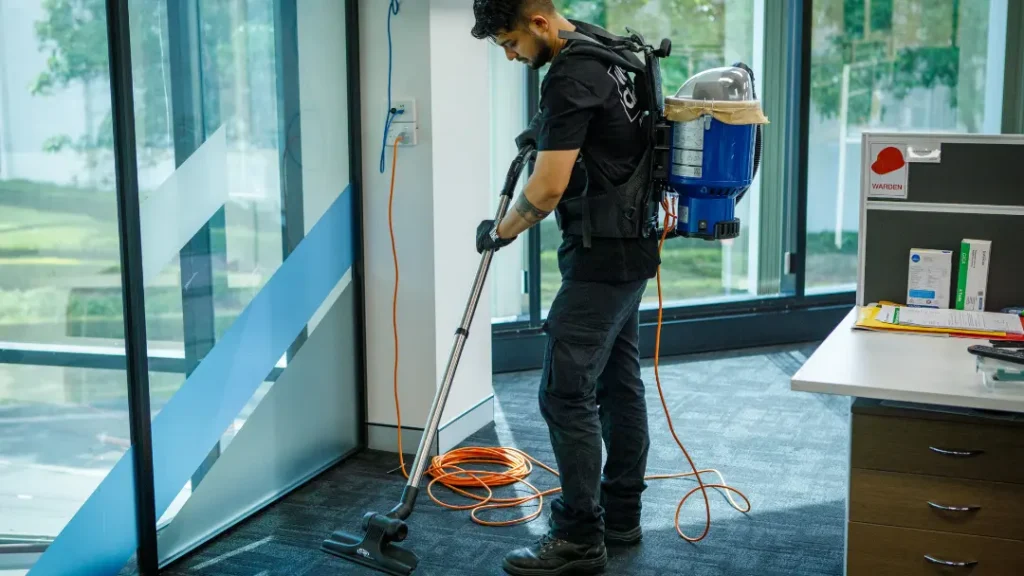
Industrial vacuums have high-filtration systems that capture dust and allergens more effectively than consumer models. They’re designed for commercial spaces: larger capacities, stronger suction, and durability for daily use.
Professional equipment cleans faster and more thoroughly. A commercial-grade floor scrubber covers large areas efficiently whilst extracting dirt that mopping leaves behind. This reduces labour time and improves results—both of which affect your total cost.
Casual contractors often use consumer-grade equipment borrowed from home. These machines miss allergens, take longer to cover the same area, and wear out quickly under commercial use. Your surfaces don’t get properly clean, and you’re paying for inefficiency.
Is your cleaner using equipment designed for commercial spaces or borrowed from home? The answer affects your air quality, your cleaning frequency, and how long your surfaces last.
Specialised Products and Dilution Ratios
Professionals use quality-tested, specialised products matched to specific surfaces and tasks. They understand that concentrated products need proper dilution—too weak wastes time, too strong damages surfaces or creates safety hazards.
Casual contractors typically use generic or consumer products without proper dilution knowledge. They may apply products at full strength when they should be diluted 1:10, damaging finishes or creating slip hazards from residue buildup.
The business risk isn’t just poor cleaning. It’s permanent damage to your property from incorrect product use—damage you’ll pay to repair.
Outcomes: What Your Premises Actually Look Like
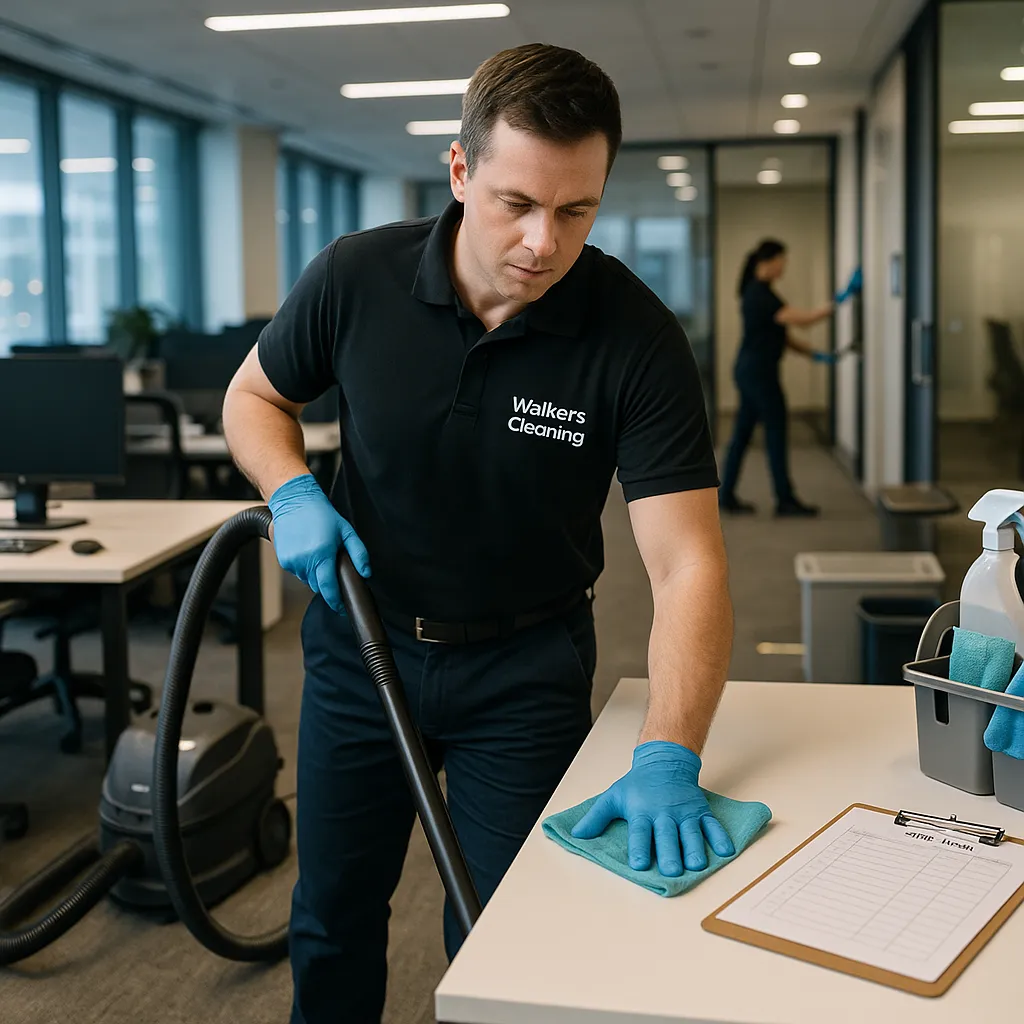
Inputs matter, but outcomes determine whether you’re getting value. Those outcomes fall into three categories that directly affect your business operations.
Surface Protection and Longevity
Professional cleaning prevents discolouration, streaking, and surface wear, extending asset life. Flooring that would last eight years with casual cleaning lasts fifteen with proper care. Fixtures maintain their appearance without premature replacement.
Improper cleaning causes scratched surfaces, dulled finishes, and accelerated deterioration. You replace assets years earlier than necessary, turning a maintenance expense into a capital expense.
What’s the replacement cost of your flooring? If it’s $40,000 and proper cleaning delays replacement by five years, you’ve saved $40,000 in present value terms. That’s the real cost comparison—not the hourly rate difference.
Indoor Air Quality and Health Compliance
Professional cleaning removes allergens, bacteria, and dust particles, improving air quality and reducing health issues. High-filtration vacuums and proper techniques address hidden areas like vents and baseboards where contaminants accumulate.
This affects your business directly: fewer sick days, better productivity, and compliance with health regulations. Poor air quality costs Australian businesses thousands annually in lost productivity and increased sick leave.
Routine cleaning handles only visible dirt, leaving allergens and bacteria untouched. Your premises look clean but aren’t healthy. That gap shows up in employee wellbeing and regulatory audits.
If you’re looking to improve these outcomes systematically, tracking cleaning performance helps you measure whether your current approach is actually working.
Client and Employee Perception
Cleanliness affects how clients, employees, and visitors perceive your business professionalism. It influences client meetings, employee morale, and recruitment decisions. A well-maintained premises signals competence and attention to detail. A poorly maintained one suggests the opposite.
Professional deep cleaning addresses details that casual cleaning misses: grout lines, light fixtures, door frames. These details matter in the first 30 seconds of a client visit—before you’ve said a word.
What impression does your premises make in those first 30 seconds? That’s what you’re actually buying when you choose a cleaning service.
Making the Decision: Your Three-Question Framework
Three questions reveal whether you’re hiring career professionals or casual contractors:
Question 1: “What structured training do your cleaners complete before and during their work with us?”
Look for specific answers: training school attendance, shadowing periods, documented processes, ongoing development. Vague responses about “on-the-job learning” signal minimal investment.
Question 2: “What insurance coverage do you carry, and can you provide current certificates?”
Request Public Liability Insurance certificates with coverage amounts. Verify they’re current and cover the work being performed. No certificate means no protection.
Question 3: “Can you provide references from clients in our industry who’ve worked with you for over two years?”
Long-term client relationships indicate consistent quality and accountability. Short tenures or reluctance to provide references signal problems.
These questions connect directly back to the financial stakes we opened with. The right choice protects your investment in premises and operations. The wrong choice creates liability and hidden costs that compound over time.
If you’re evaluating providers now or reconsidering your current arrangement, professional commercial cleaning services should be able to answer all three questions confidently and specifically. If they can’t, you’re looking at casual contractors—regardless of what they call themselves.
Ready to work with career professionals who protect your premises and your budget? Contact Walkerscleaning to discuss how structured training, proper insurance, and proven accountability systems deliver better outcomes for your business.