
You replaced the office carpets 18 months ago. They looked sharp, professional, clean. Now? Matted traffic lanes run from the entrance to the lifts. The colour’s faded near the windows. There’s a stain by the kitchen that won’t shift no matter what you try.
You’re already budgeting for replacement. Again.
Here’s the problem: commercial carpets should last seven years minimum with proper care. If you’re replacing them every two to three years, you’re not dealing with normal wear. You’re dealing with preventable maintenance failures. The good news? Most of the damage is avoidable. The schedule that prevents it is simpler than you think.
The Two-Year Mark: When ‘Normal Wear’ Becomes a Budget Problem
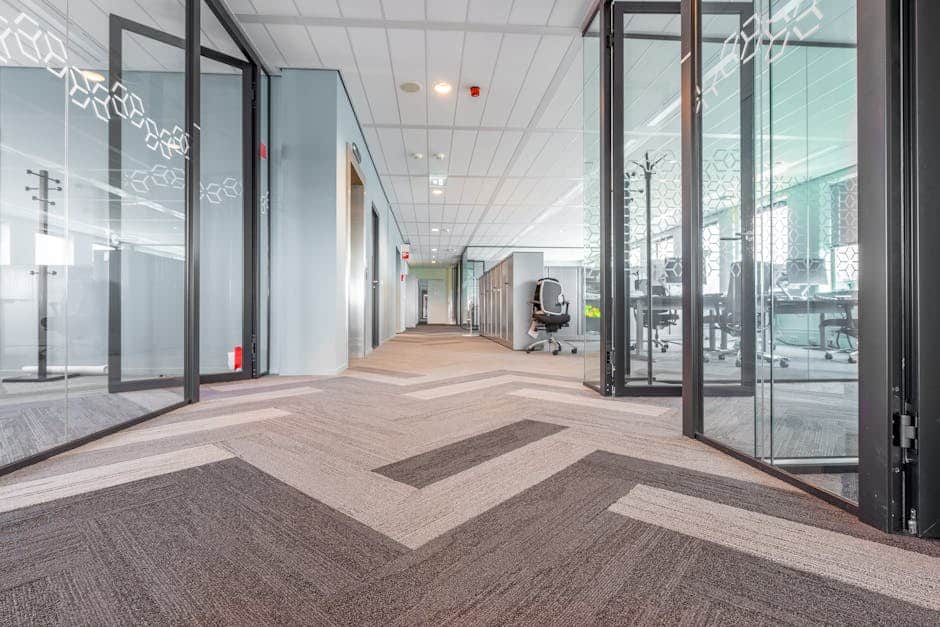
Photo by Mike van Schoonderwalt on Pexels
At the two-year mark, facility managers start noticing the same visual cues. Traffic lanes appear darker and flatter than surrounding areas. Colours fade unevenly, particularly in zones with natural light. Stains that should have lifted become permanent fixtures. The carpet looks tired, and no amount of vacuuming brings it back.
The financial impact compounds quickly. Commercial carpet replacement costs between $50 and $150 per square metre depending on quality. For a 200-square-metre office, that’s $10,000 to $30,000 every two years instead of every seven. You’re spending three times what you should on flooring alone.
This isn’t inevitable. It’s abnormal.
Ask yourself: have you replaced office carpets more than once in five years? If yes, the problem isn’t the carpet. It’s what’s happening to it between installation and replacement.
The Maintenance Mistakes That Age Carpets in Dog Years
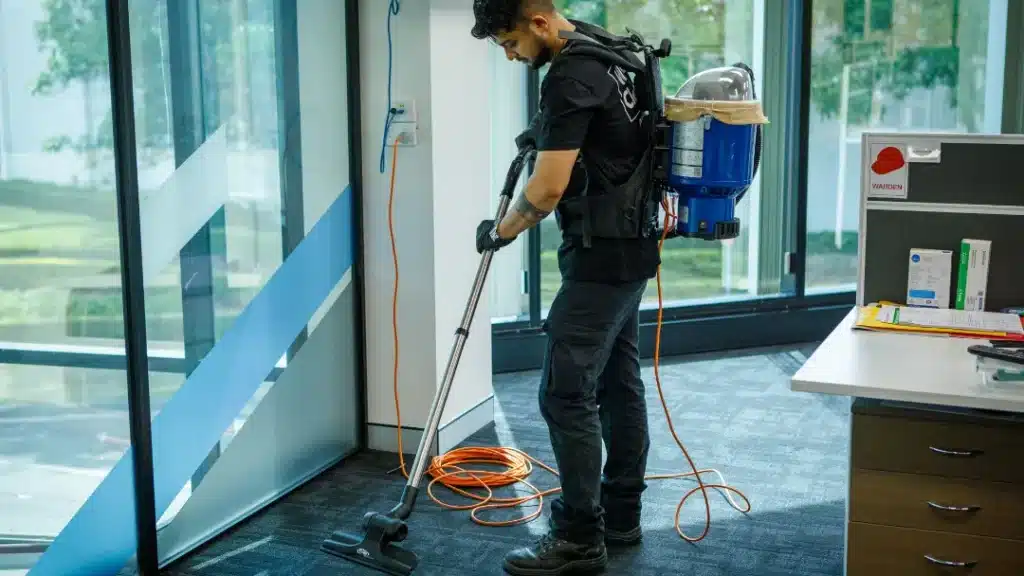
Most carpet damage is self-inflicted. Not through negligence, but through well-intentioned maintenance gaps that seem reasonable until you understand what’s actually happening beneath the surface.
These aren’t dramatic failures. They’re subtle, common mistakes that accelerate wear by years. Three patterns show up repeatedly, and chances are at least one applies to your current maintenance approach.
Vacuuming Once a Week (and Other Well-Intentioned Failures)
Weekly vacuuming sounds sensible. It’s what most offices do. It’s also insufficient for any area with moderate to high foot traffic.
Soil accumulates daily. Every person walking through your office brings grit, dust, and particles that embed into carpet fibres. Between vacuum sessions, those particles sit there, grinding deeper with every footstep. By the time you vacuum again, the damage is done.
High-traffic areas need daily vacuuming. Corridors, entrances, zones near lifts and meeting rooms. Moderate-traffic areas need it three to four times weekly. This frequency surprises most facility managers, and that’s understandable. But it’s the difference between carpets that last two years and carpets that last seven.
The ‘Wait Until It Looks Dirty’ Deep Clean Schedule
If you can see the dirt, the fibres are already damaged.
There’s a lag between soil accumulation and visible appearance. Carpets look fine for weeks while grit embeds at the base of fibres, cutting and abrading with every step. By the time the carpet looks dirty, you’re not preventing damage anymore. You’re trying to reverse it, and that’s rarely possible.
Effective deep cleaning happens before carpets look dirty. Think of it like brushing your teeth. You don’t wait until they hurt. You prevent the problem before it becomes visible. The same logic applies here.
Ignoring Entry Mats as Part of Your Carpet System
Eighty per cent of soil enters through building entrances. If your matting system isn’t capturing it there, it’s spreading across every carpeted surface in your office.
Inadequate matting fails in three ways: it’s too small, it’s the wrong type, or it’s poorly maintained. A single metre of matting at the entrance doesn’t cut it. You need a minimum of four to five metres of matting depth at main entrances to effectively trap grit before it reaches your carpets.
And those mats need daily vacuuming themselves. A saturated mat doesn’t trap anything. It becomes a distribution point for the very soil it’s meant to capture.
What Actually Happens to Carpet Fibres Under Daily Office Traffic
Understanding the physical mechanism of carpet deterioration makes prevention strategies logical rather than arbitrary. This is what you can’t see happening beneath the surface every single day.
Soil Particles Act Like Sandpaper on Every Footstep
Grit particles lodge at the base of carpet fibres. They’re small, sharp, and abrasive. Each footstep grinds those particles against the fibres, creating a cutting action that severs them gradually.
Picture thousands of tiny blades slicing through fibres with every step. That’s not an exaggeration. It’s the literal mechanism of wear. The damage is permanent and cumulative. You can’t reverse severed fibres with cleaning. You can only prevent the cutting from happening in the first place.
Why High-Traffic Zones Fail First (and Fastest)
Entrances, corridors, areas near lifts and meeting rooms. These zones experience exponentially more wear than the rest of your office. More footsteps multiplied by the same soil load equals faster damage.
The visual result is obvious: traffic lanes that appear darker, flatter, and worn compared to surrounding areas. But here’s the critical point: these zones don’t need the same maintenance schedule as low-traffic areas. They need disproportionately more frequent attention.
Treating your entire office with a uniform maintenance schedule guarantees that high-traffic zones will fail years before the rest of your carpets. If you’re implementing a Track Cleaning Performance Commerical Cleaning Sydney approach, zone-based scheduling should be central to your strategy.
The Maintenance Schedule That Extends Carpet Life to Seven Plus Years

This is the prevention framework that addresses every problem identified above. It’s a three-tiered approach: daily, monthly, and quarterly interventions that prevent damage rather than react to it.
Yes, it requires more effort upfront. But it saves money long-term by eliminating premature replacement cycles. The maths is straightforward: spend more on maintenance now, or spend three times as much on replacement later.
Daily: The 5-Minute Tasks That Prevent 80% of Damage
Daily vacuuming of all high-traffic areas and entrance zones. This isn’t negotiable. It’s the single most effective intervention you can implement.
Daily mat maintenance: vacuum or shake out entrance mats so they continue trapping soil rather than redistributing it. Immediate spot treatment for spills before they set and become permanent stains.
Time estimate: five to ten minutes per area. For most offices, that’s 20 to 30 minutes total daily effort. It’s manageable, and it prevents the majority of damage that leads to early replacement.
Monthly: Interim Cleaning That Removes Embedded Grit
Vacuuming removes surface soil. It doesn’t remove grit that’s already embedded below the surface. That requires interim cleaning: bonnet cleaning or low-moisture extraction methods that lift embedded particles without saturating the carpet.
Focus on high-traffic zones and anywhere showing early signs of matting. This can be done in-house if you have the equipment, or contracted out. Most businesses schedule it during off-hours to avoid disruption.
If you’re working with a provider like Walkerscleaning, they can integrate interim cleaning into a broader maintenance plan tailored to your office layout and traffic patterns.
Quarterly: Deep Extraction Before Damage Becomes Visible
Hot water extraction, commonly called steam cleaning, is the thorough restorative method that removes soil, oils, and embedded grit from deep within carpet fibres. Every three to four months prevents that soil from causing permanent damage.
This should cover your entire carpeted area, not just visibly soiled spots. Remember: if it looks dirty, the damage is already done. You’re preventing the problem before it becomes visible.
Drying time matters. Schedule deep extraction around office use, ideally over a weekend or during periods of low occupancy. Most carpets dry within 6 to 12 hours with proper ventilation.
Protecting Your Next Carpet Investment from Day One
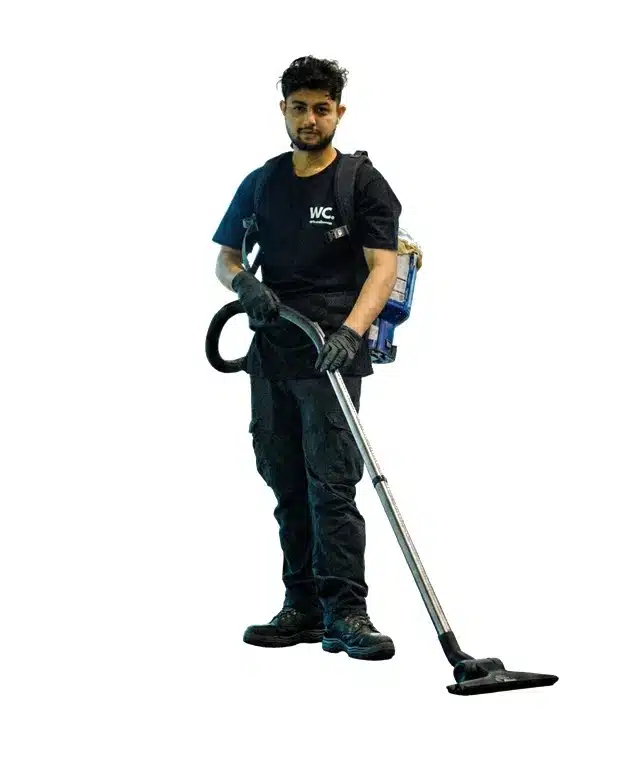
If you’re facing another two-year replacement cycle, the solution isn’t better carpet. It’s better maintenance from day one.
Start the schedule immediately after installation, not after carpets begin showing wear. Assess your current carpet condition honestly. If you’re already seeing matted traffic lanes and permanent stains, you’re past the prevention stage. But you can still extend what’s left of their lifespan and protect your next investment properly.
First-week action steps: establish your mat system with adequate depth at all entrances. Schedule your first deep clean to remove any existing embedded soil. Set up daily vacuuming routines for high-traffic zones. If you’re implementing a comprehensive 2026 Commercial Cleaning Services Sydney strategy, carpet maintenance should be a core component, not an afterthought.
The value proposition is clear: triple the lifespan, reduce replacement frequency, maintain a professional appearance that reflects well on your business. The alternative is replacing carpets every two years and wondering why the cycle keeps repeating.
If you need expert guidance implementing these strategies or want a tailored maintenance plan for your office, contact Walkerscleaning for a consultation. They specialise in commercial carpet care that extends lifespan and eliminates premature replacement cycles.