
You’ve just received a quote for replacing your office carpet. The number is eye-watering. Installation downtime means disrupting operations for days. Your budget is already stretched, and now you’re facing a five-figure expense you weren’t planning for.
Here’s what most facility managers don’t realise: the carpet probably isn’t worn out. It’s damaged in specific, reversible ways. What looks like end-of-life deterioration is usually concentrated damage patterns that can be addressed individually, often for a fraction of replacement costs.
This isn’t about delaying the inevitable with quick fixes. Properly maintained commercial carpet can last up to 20 years, not the decade most facility managers expect. The interventions covered here can genuinely extend carpet life by 8-10 years before replacement becomes necessary. That said, replacement is sometimes the right call. We’ll cover when that’s true as well.
Why Carpet Replacement Quotes Keep Rising (And Why Most Are Premature)
Commercial carpet replacement costs have climbed sharply. Materials, labour, installation, and operational downtime all contribute to quotes that now routinely exceed $50,000 for medium-sized offices. The pressure to approve these expenses is immediate and intense.
Yet properly maintained commercial carpet can last up to 20 years, far longer than the typical replacement cycle. Most replacement decisions are triggered by appearance issues, not actual structural failure. The carpet looks tired. Traffic lanes are visible. Certain areas seem permanently dirty. So the assumption is: it’s worn out.
But what if the carpet isn’t worn out? What if it’s just poorly maintained?
That’s the question worth asking before signing off on a replacement quote. Because in most cases, what you’re seeing isn’t age. It’s specific damage patterns that can be reversed or prevented.
The Real Culprits Behind ‘Worn Out’ Carpets
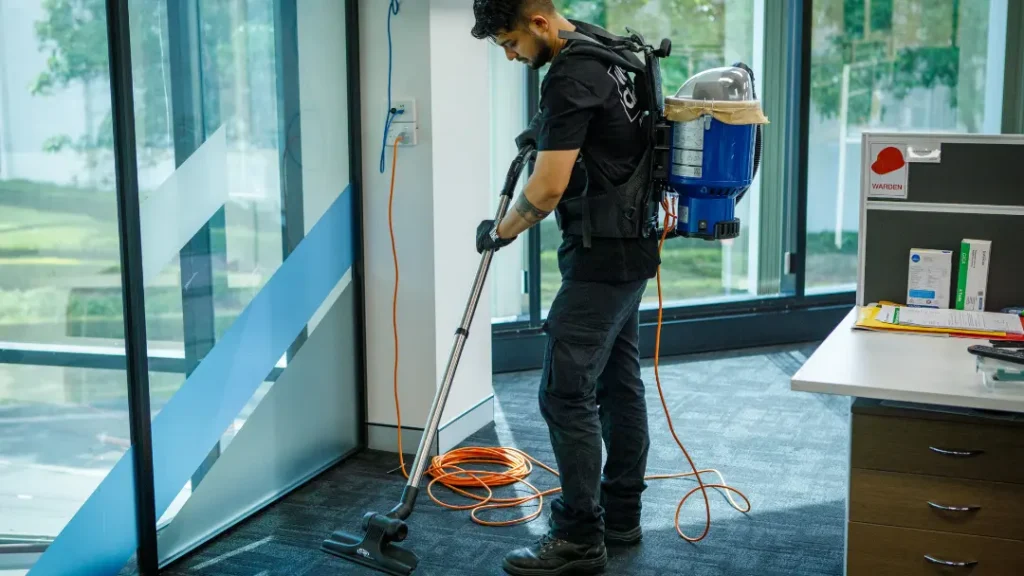
What looks like ‘old carpet’ is usually three or four specific problems masquerading as general wear. Address those problems individually, and the carpet often looks years younger.
Up to 80% of dirt and dust that enters a building comes from the outside, primarily on shoes. This creates concentrated damage zones near entrances and along walkways. The damage isn’t evenly distributed. It’s localised, predictable, and fixable.
Here are the three most common problems facility managers misdiagnose as ‘end of life’.
Traffic lanes and compressed fibres in walkways
Traffic patterns create permanent-looking ‘cattle trails’ by compressing carpet fibres, not wearing them away. The fibres aren’t gone. They’re flattened. Compressed fibres reflect light differently, making pathways appear darker and dirtier than surrounding areas.
This isn’t purely cosmetic. It affects professional appearance and creates the impression that your office is neglected. But it’s reversible with proper restoration techniques, which we’ll cover shortly.
Chair caster damage creating permanent divots
Chair casters create concentrated pressure points that cause permanent pile compression in high-use zones like desks. The carpet under every desk chair gets hammered daily. Over time, you see flattened areas that don’t spring back.
Here’s the kicker: carpet warranties often exclude damage from rolling loads. That means this damage is an uninsured risk. Prevention is more effective than repair here, and we’ll explain how to stop it before it starts.
Chemical transfer from hard floor cleaning breaking down fibres
Quaternary disinfectants used on hard floors can transfer to carpets, breaking down fibres over time. This isn’t a cleaning staff error. It’s a common oversight in multi-surface facilities where the same equipment or chemicals are used across different flooring types.
Sunlight combined with harsh cleaning chemicals strips protective factory coatings, causing faster and patchier fading. The deterioration pattern looks like age, but it’s actually chemical damage. Once you know what’s causing it, you can stop it.
Four Interventions That Restore Carpets (Not Just Clean Them)
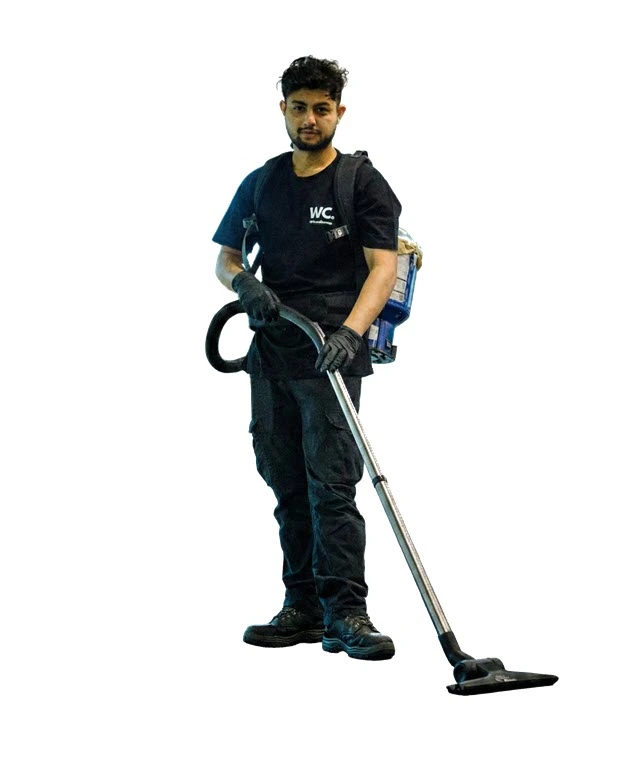
These aren’t cleaning methods. They’re restoration techniques that reverse damage, not just remove dirt. Each intervention targets one of the specific damage patterns identified above. They require investment, but they cost a fraction of replacement.
Most require professional equipment or implementation. If you need expert help, Walkerscleaning specialises in commercial carpet restoration and can guide you through the process.
Low-moisture encapsulation for compressed traffic lanes
Low-moisture encapsulation uses minimal water to lift and separate compressed fibres in traffic lanes. The cleaning solution crystallises around dirt particles, which are then vacuumed away. The process physically lifts flattened fibres, restoring their appearance.
Drying time is as fast as 30 minutes, which minimises disruption to operations. This is an interim cleaning method that reduces the frequency of deep cleans whilst restoring appearance. It should be done regularly, not as a one-off fix.
This is not the same as hot water extraction. Encapsulation uses far less water and dries faster, making it ideal for high-traffic areas that can’t be taken offline for hours.
Strategic chair matting to halt caster damage
Chair mats are a preventative measure that stops damage before it starts. Since warranties exclude rolling load damage, chair mats are financially protective. They’re not a restoration technique, but they prevent the need for one.
Place them under every desk chair in high-use areas. Quality matters here. Cheap mats crack, shift, or fail to distribute weight properly. Invest in proper commercial-grade matting designed for carpet use.
The 15-foot entryway mat rule that stops 80% of dirt
The ’15-foot entryway mat rule’ (or 5+ metres) captures 80% of tracked-in dirt before it reaches carpet. Most offices use inadequate matting that’s too short, allowing dirt to damage carpets.
The EPA recommends vacuuming entrance mats daily using a beater-brush vacuum in two directions. This prevents dirt from being pushed deeper into the mat and eventually transferred to the carpet.
Measure your current matting. If it’s less than 5 metres, extend it. The specific length matters because dirt needs multiple steps to be fully dislodged from shoes. Shorter mats don’t provide enough contact time.
Hot water extraction for deep-set contamination
Hot water extraction is the deep cleaning method for removing deep-seated dirt and allergens that encapsulation can’t reach. It should be performed every 6 months to a year, not just when carpet looks dirty.
HEPA filtration removes 99.97% of particles, improving indoor air quality. This requires professional equipment (a carpet extractor) and longer drying time than encapsulation, but it’s essential for maintaining carpet health over the long term.
This doesn’t replace encapsulation. The two methods work together. Encapsulation handles interim maintenance and traffic lane restoration. Hot water extraction handles deep contamination and allergen removal.
The 8-Year Extension: What Proactive Maintenance Actually Costs
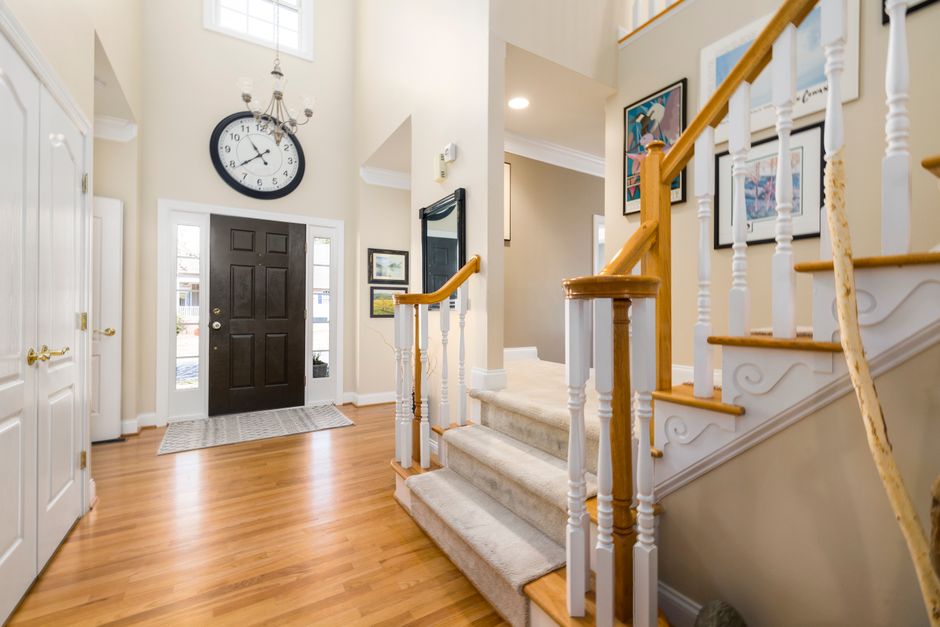
Photo by Curtis Adams on Pexels
Proactive carpet maintenance can extend carpet life by 8-10 years. Here’s what that actually costs compared to replacement.
For a 5,000 square foot office, replacement typically costs $40,000-$60,000. Maintaining that same carpet for 8 years costs roughly $12,000-$18,000, including:
- Entryway matting installation and replacement: $2,000-$3,000
- Chair mats for 50 workstations: $3,000-$5,000
- Quarterly encapsulation cleaning: $4,000-$6,000 over 8 years
- Biannual hot water extraction: $3,000-$4,000 over 8 years
The ROI is clear. You’re spending roughly 25-30% of replacement costs to extend carpet life by nearly a decade. That’s not just carpet care. It’s budget justification.
For expert guidance on implementing a proactive maintenance programme, Walkerscleaning can assess your current carpet condition and recommend a tailored approach.
When Replacement Actually Makes Sense
Replacement is sometimes the right choice. If you’re dealing with structural damage, water damage, or health hazards (mould, persistent odours, allergen contamination), restoration won’t fix it. Replace the carpet.
If restoration costs approach 50-60% of replacement, consider replacing. At that point, you’re not saving enough to justify keeping damaged carpet.
Carpets nearing 20 years, even with good maintenance, may be due for replacement. Fibres degrade over time. Backing deteriorates. At some point, the carpet has simply reached the end of its useful life.
But most replacements are premature. You now have the knowledge to make an informed decision, not just accept quotes. Measure your matting. Assess your traffic lanes. Check for chemical transfer. Implement chair mats. Schedule proper cleaning.
If you need expert help evaluating whether your carpet can be restored or should be replaced, contact Walkerscleaning for a professional assessment. They’ll give you an honest answer, not just a sales pitch.